
Last updated November 16, 2026
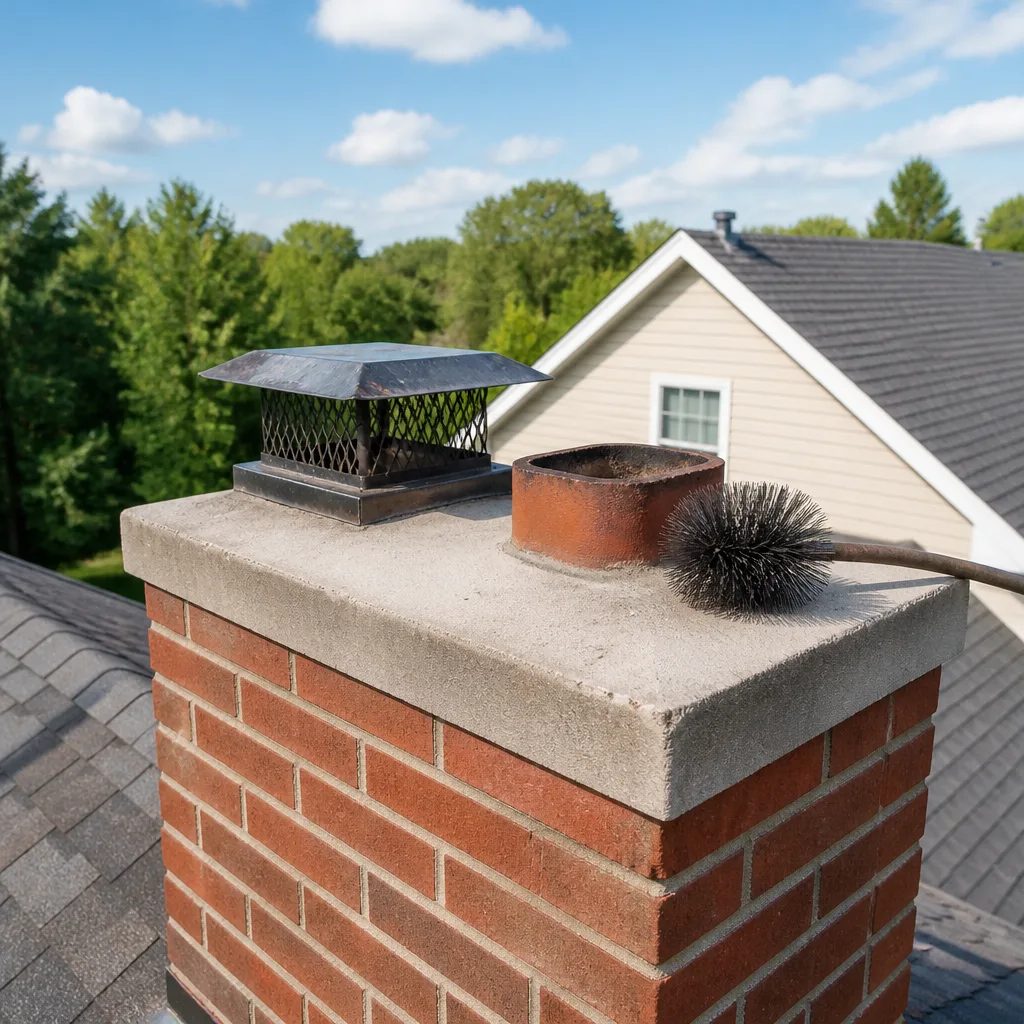 Sweep & inspection
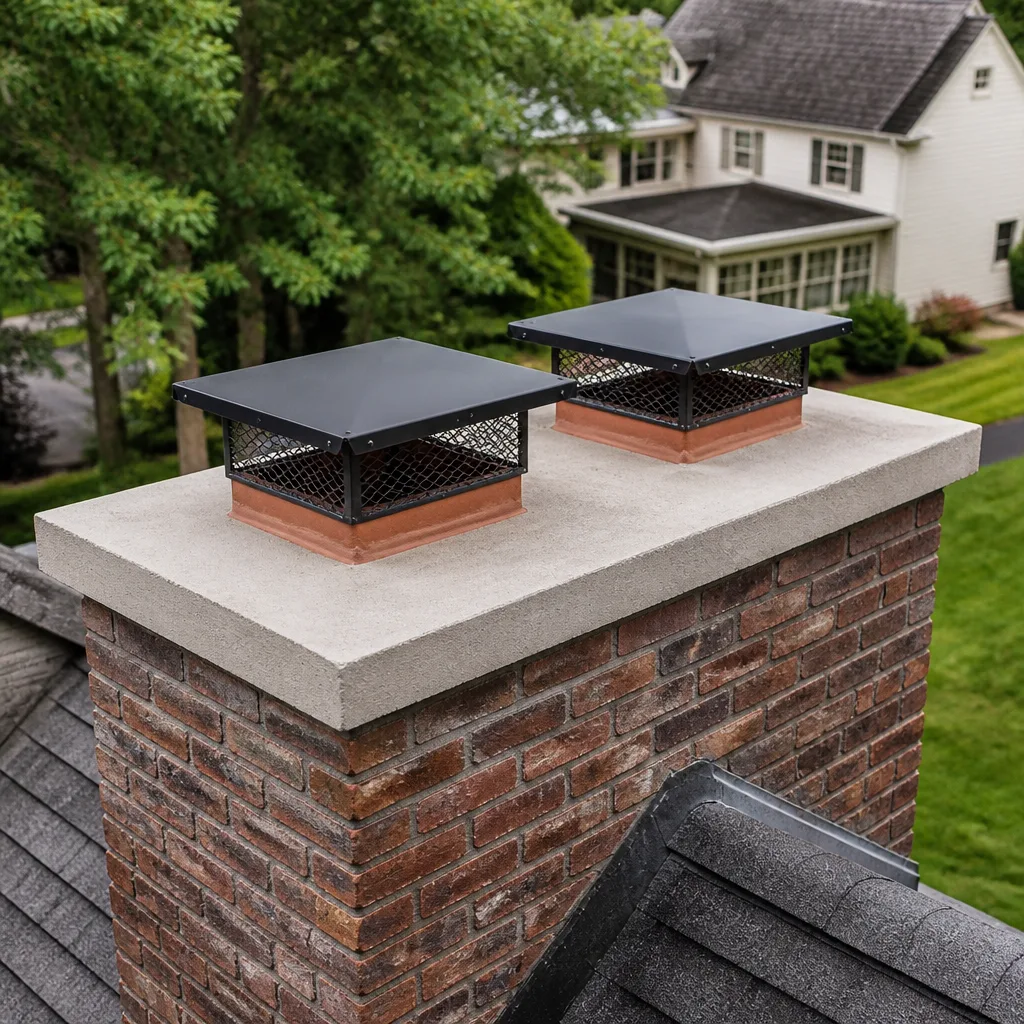 Caps & crowns
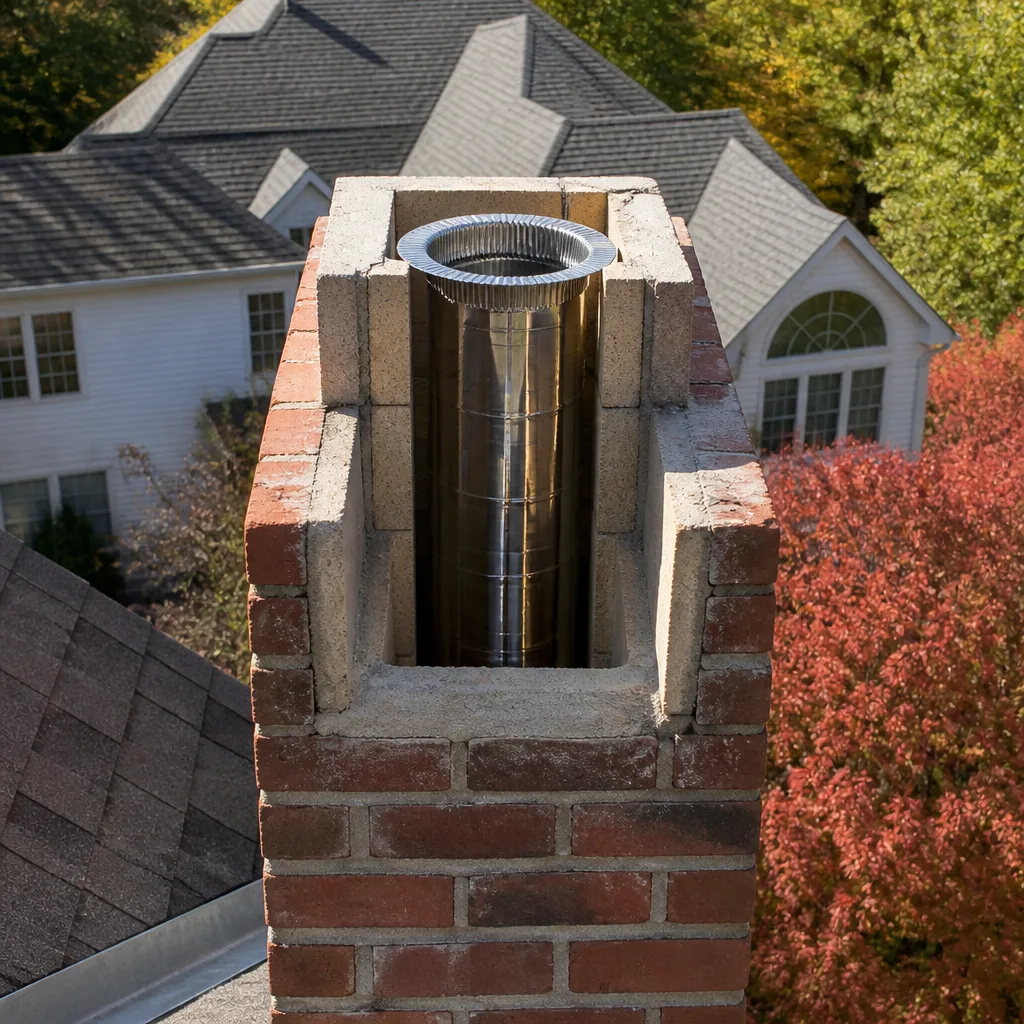 Flue relining
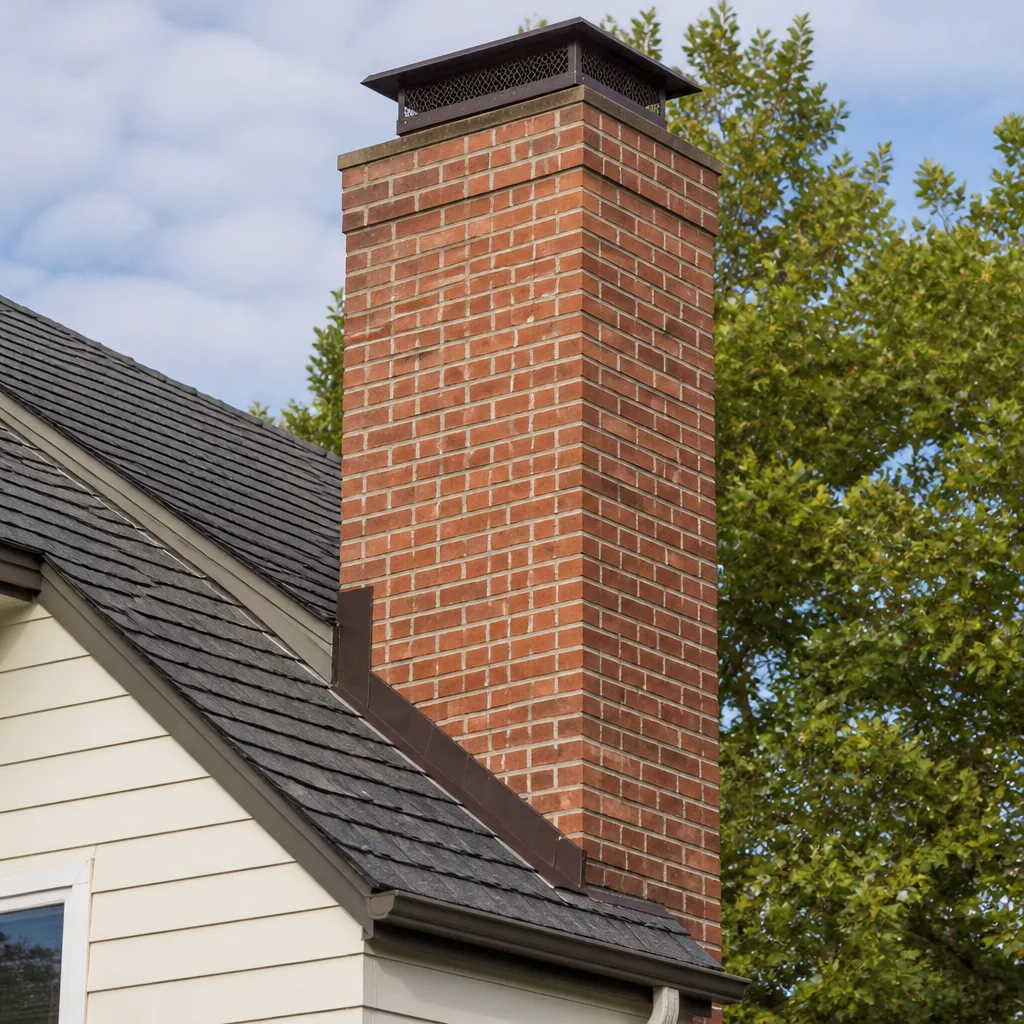 Masonry repair
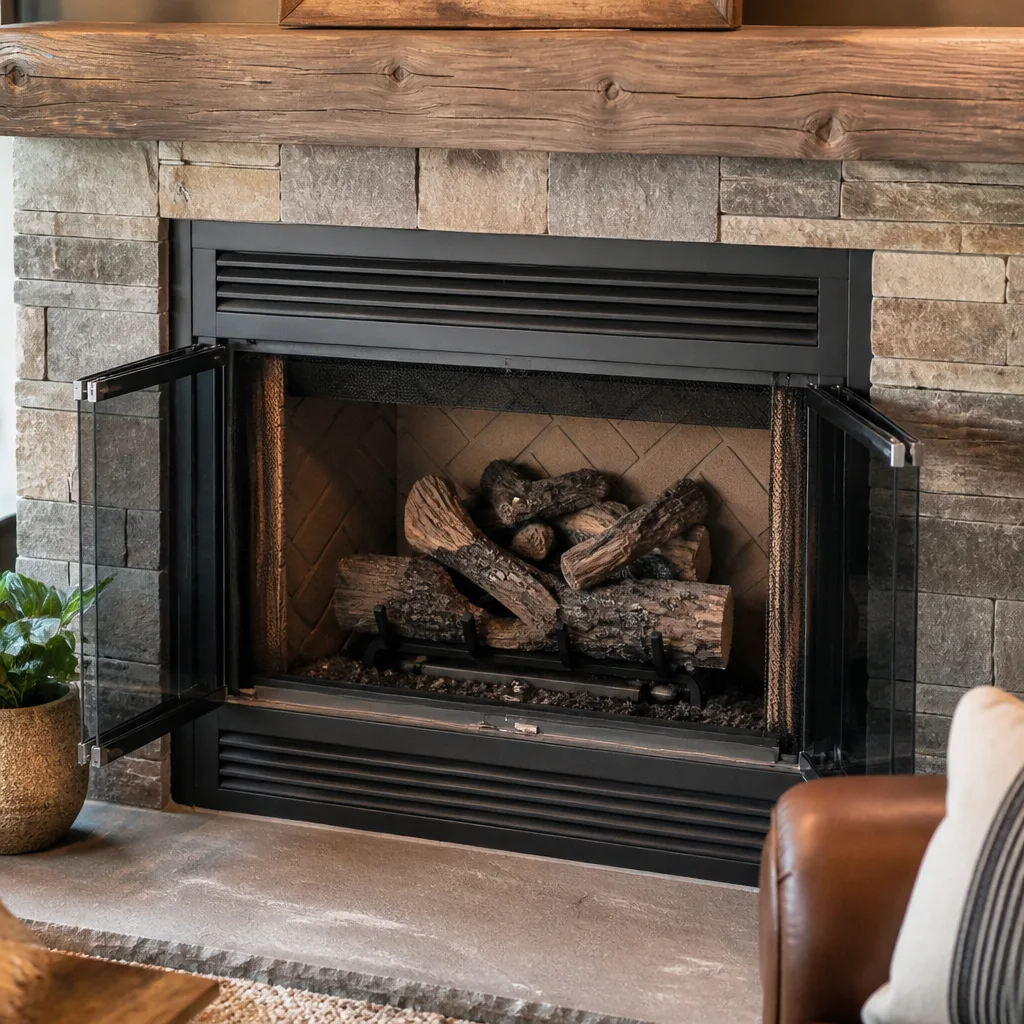 Gas fireplace service
Level 1 sweep and inspection to the NFPA 211 annual standard - flue, crown, cap, and flashing checked and photographed
Chimney sweep logs do not sweep chimneys. They loosen some creosote - which then falls where a brush and vacuum still have to collect it.
Chimney Sweep Maintenance Schedule: What to Do and When
A wood-burning fireplace used six times last winter and an oil furnace flue swept on the same annual schedule are not the same system, and they don’t belong on the same maintenance clock. That’s the first thing we correct when homeowners ask about chimney care. The industry rule of “at least annually” is a floor, not a plan. A flue that carries furnace exhaust through a St. Paul heating season that runs seven months burns through far more than a decorative fireplace that sees a cord of wood a year. This guide sets out the decision framework professionals actually use to time inspection and sweeping – appliance by appliance, fuel by fuel, and month by month in a Minnesota climate.
Quick Answer
Sweep and inspect every chimney at least once a year, but set the interval by appliance type, fuel, and how many hours you actually burn. In St. Paul, wood fireplaces and inserts typically need service before the heating season starts, oil and gas furnace flues need annual inspection on their own schedule, and pellet stoves usually need more frequent attention. Book in late summer or early fall; if you missed that window, get on the schedule before the first sustained cold snap, and treat anything you noticed over the winter as a priority.
Styles & brands we work with
- Sweep & inspection
- Caps & crowns
- Flue relining
- Masonry repair
- Gas fireplace service
Table of Contents
- Why “Once a Year” Isn’t a Real Maintenance Plan
- Maintenance Intervals by Appliance Type
- What NFPA 211 Actually Says – and What It Means in Minnesota
- Pre-Season Tasks: Before the First Burn
- Post-Season Tasks: What to Check in Spring
- What You Can Own vs. What Needs a Certified Sweep
- Month-by-Month Schedule for St. Paul
- What to Do If You Missed the Fall Window
Why “Once a Year” Isn’t a Real Maintenance Plan
The annual sweep is the minimum the trade agrees on. It is not a schedule tuned to your system. Think of it the way you think about oil changes: the recommendation on the sticker assumes average driving, and if you tow a trailer up Highway 61 every weekend, average doesn’t apply. A chimney works the same way. Creosote accumulates at a rate set by what you burn, how hot the fire runs, how long the flue stays warm, and how well the firebox draws. Two houses on the same block in St. Paul can need very different service intervals.
Three variables drive the schedule more than anything else:
- Fuel. Seasoned hardwood leaves less creosote than green or soft wood. Oil and gas appliances leave different deposits entirely – soot and scale rather than the sticky glaze wood produces.
- Usage hours. A fireplace used six evenings a year and one burning daily from October to April are not in the same category, even if both get “swept annually.”
- Appliance design. An open masonry fireplace loses most of its heat up the flue and runs cool. A modern insert or a sealed gas unit runs hotter and drafts differently. Each pattern leaves its own signature.
That’s why our first question on any call isn’t “when did you last sweep?” It’s “what are you burning, and how often?” The answer shapes everything that follows. In a St. Paul winter that can start in October and hold through April, the difference between a lightly used fireplace and a furnace flue running every day is a full season of accumulation.
Maintenance Intervals by Appliance Type
Here is the framework we use to set inspection and sweep intervals. These are starting points, not fixed law – a technician adjusts them once the flue is actually looked at. But they get you close to the right schedule before anyone arrives.
Open Wood Fireplace
An open masonry fireplace is the least efficient system in the house and the one most likely to be used casually. Creosote forms every time the fire smoulders, and an open hearth smoulders plenty. Inspect and sweep annually if you burn regularly. If you light it a handful of times a season with well-seasoned wood, an annual inspection still makes sense, and the sweep may not always be needed. The inspection tells you which.
Wood Insert
Inserts burn hotter and more efficiently than open fireplaces, which sounds like good news for creosote and mostly is – but a hot, controlled fire in a smaller flue can still build glazed creosote when the fire is damped down for the night. Annual inspection is standard. Heavy users, meaning daily burners through a St. Paul winter, often benefit from a mid-season look as well.
Gas Fireplace
Gas doesn’t produce creosote, so a lot of homeowners assume gas needs nothing. It does need attention. Gas units can produce moisture and mild deposits, and the venting, termination cap, and pilot assembly all deserve an annual check. A gas fireplace that hasn’t been looked at in years is a common discovery during a pre-season visit – not because it’s dangerous, but because venting problems and blocked terminations go unnoticed until they cause trouble.
Oil Furnace Flue
An oil furnace flue accumulates soot and can suffer from condensation that attacks the liner from the inside. Annual inspection is important here, and in our experience it’s the appliance most often forgotten because the furnace lives in the basement and nobody thinks of the chimney as part of it. If you’ve converted from oil to gas, the flue was sized for oil and may now be oversized for the new appliance – a condition that changes the whole maintenance picture.
Pellet Stove
Pellet stoves produce fly ash that builds up faster than wood creosote in some setups, and the venting runs are often short and horizontal, which makes them collect debris. Many manufacturers call for more frequent cleaning than once a year. Follow the appliance manual, and treat annual as the floor rather than the target.
What NFPA 211 Actually Says – and What It Means in Minnesota
NFPA 211, the standard for chimneys, fireplaces, vents, and solid fuel appliances, is the reference the trade works from. Its guidance is that chimneys, fireplaces, and vents be inspected at least annually and cleaned as needed. Read that carefully: inspected annually, cleaned as needed. Those are two different verbs, and the distinction matters. A chimney can pass inspection without needing a sweep, and a chimney that “looks fine” can still need one.
What “at least annually” means in practice depends on how hard the system works. Here’s the part the standard can’t tell you: a Minnesota heating climate is not an average climate. A St. Paul home can run its heating appliance from October into April, seven months of sustained demand. That’s a longer continuous burn season than most of the country, and it changes what “annual” should look like for a heavily used appliance.
Three practical translations:
- Inspect annually, without exception. The inspection is the decision point. It tells you whether the flue needs sweeping and whether anything has changed since last year.
- Sweep based on what’s found. A lightly used fireplace may need cleaning every other year. A furnace flue running daily through a St. Paul winter is a different story.
- Treat the standard as a baseline for a mild climate, not yours. If you burn hard, your interval is shorter than the minimum. That’s not an upsell; it’s what the accumulation actually looks like.
A proper inspection is documented in writing. We produce a written record of system condition that’s usable for real estate transactions and insurance requirements, so there’s a paper trail of what was found and when. That record is worth keeping – it’s how you track whether a flue is stable or slowly changing year over year.
Pre-Season Tasks: Before the First Burn
The pre-season visit is where most problems get caught before they matter. Timing in St. Paul matters here: the goal is to be done before the first sustained cold, ideally in late summer or early fall. Once the heating season starts, scheduling tightens for everyone.
What we check on a pre-season visit:
- Cap inspection. A damaged or missing cap lets water, animals, and debris into the flue. We fit caps from Gelco and Famco because a properly fitted termination is the difference between a flue that stays dry and one that doesn’t.
- Damper function. A damper that won’t seal wastes heat and lets the house leak air all winter. It should open, close, and seat cleanly.
- Liner visual. The flue liner gets looked at for cracks, gaps, and deterioration. If a clay liner is spalling, that gets flagged now, not mid-winter.
- Creosote level. The sweep removes what’s accumulated and tells you the level found – light soot, moderate flaky creosote, or the glazed stage that needs more attention.
- Firebox and door condition. Cracks, loose bricks, and gasket wear get noted. A wood stove or insert door gasket that’s failed lets the fire run uncontrolled.
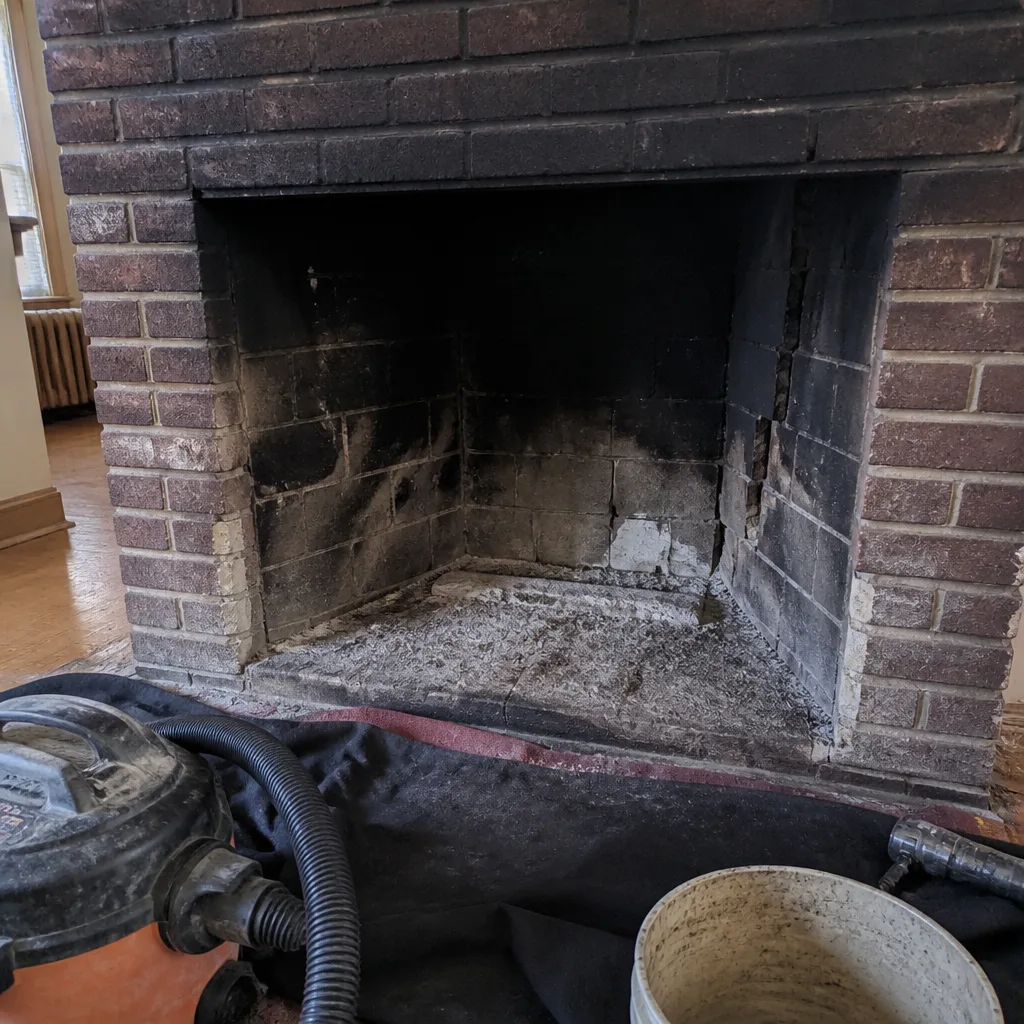
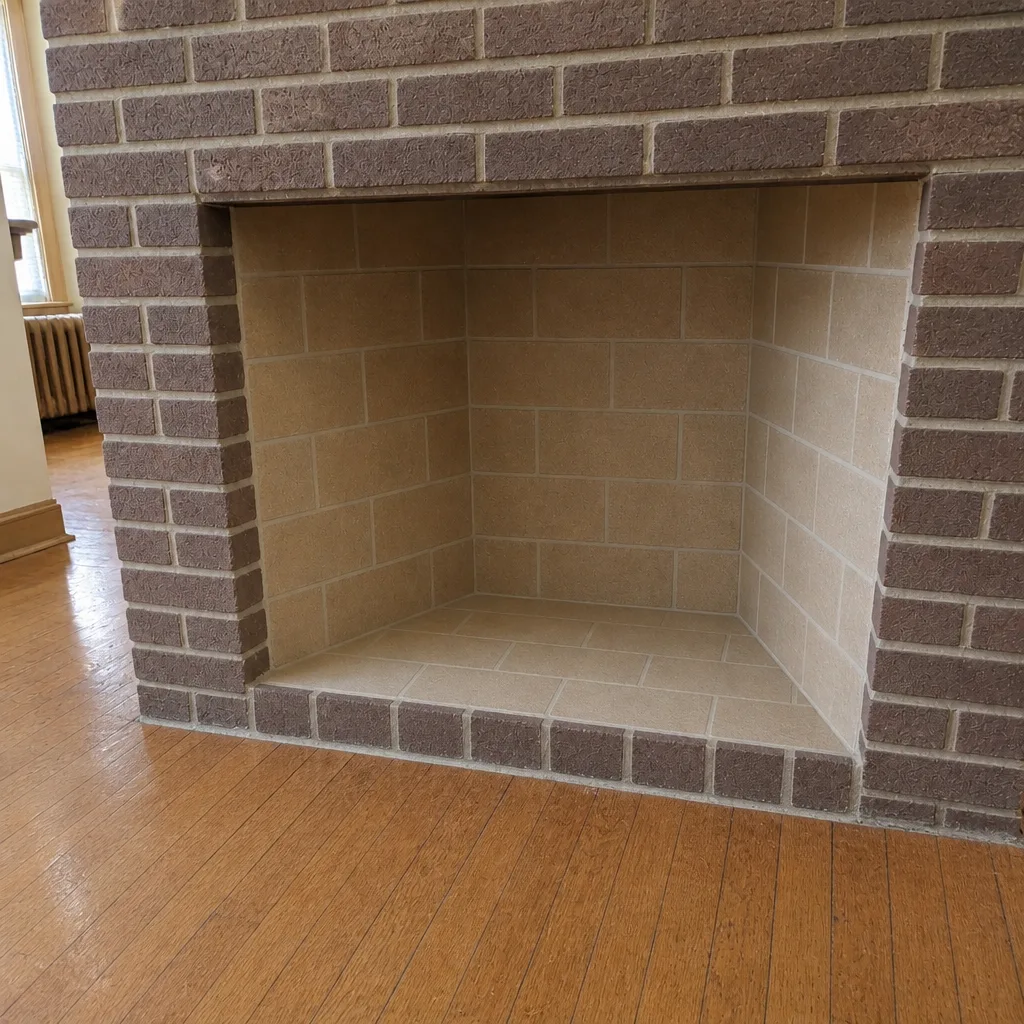
If the liner turns out to be deteriorated, this is where HeatShield comes in. We’re able to resurface a flue liner without full demolition, which is a repair path that saves significant cost compared to a full reline. Not every liner qualifies, but when it does, it’s the right call – and it beats discovering the problem in January.
Post-Season Tasks: What to Check in Spring
Spring is when the chimney tells you how the winter went. The fire is out, the flue is cool, and the signs are readable in a way they aren’t during the burn season. This is the season for diagnosis rather than cleaning.
What a post-season check covers:
- Moisture check. Staining on the ceiling, rust on the firebox, or a musty smell near the hearth can point to water getting in. Water is the slow destroyer of masonry, and catching it in spring leaves the whole building season to fix it.
- Efflorescence. That white powdery staining on exterior brick is a sign of moisture moving through the masonry. It’s a symptom worth understanding rather than scrubbing off.
- Animal activity. Squirrels, birds, and raccoons find uncapped flues. A spring check catches nests and debris before they become a fall problem, and a properly fitted cap prevents the repeat.
- Winter damage. Freeze-thaw cycles work on mortar joints and caps. Spring is when cracks from the past winter show up.
Spring is also the most sensible time to plan any repair work. Masonry and liner work can be scheduled without racing the first cold snap, and the diagnosis is fresh. If your flue needs DuraFlex relining – for an oil-to-gas conversion, or an oversized masonry flue that was never right for the appliance – spring is when that job gets specified properly and finished before it matters.
What You Can Own vs. What Needs a Certified Sweep
Homeowners can and should handle part of the maintenance. The line between what’s safe to do yourself and what isn’t is not vague, but it does get crossed. Here’s the honest split.
Tasks a homeowner can own
- Ash removal timing. Empty the ash pan when it’s full, not on a schedule. Leave a bed of ash in a wood firebox – it helps the fire. Never put ash in a paper bag or a plastic bin; it can hold heat for a long time.
- Door gasket checks. On a wood stove or insert, run a hand around the door when it’s cold. A gasket that lets air past needs replacing, and it’s a simple check to do yourself.
- Cap debris clearing from the ground. If you can see a bird’s nest or leaves packed into the cap from outside, note it and call. Don’t climb onto a roof to deal with it.
- Visual checks. Look at the firebox, the damper, and the exterior brick. You don’t need to diagnose – just note changes and report them.
Tasks that need a certified sweep
Sweeping the flue itself, inspecting the liner, and assessing creosote level all require training, the right brushes, and the right eye. So does anything involving the flue interior. Roof access is a fall risk, and the working components – the liner, the cap, the crown – are where a wrong decision has real consequences. We handle all three services – sweep, repair, and inspection – under one roof, so there’s no coordinating a separate inspector after the work is done. That matters for a schedule like this, because it keeps the assessment and the service in the same hands.
Month-by-Month Schedule for St. Paul
Here’s the calendar we’d give a St. Paul homeowner if they asked us to lay out the year. It’s built around the fact that the heating season runs long and the shoulder seasons are short.
- May and June – Book the inspection. Post-season is the diagnostic window. Get the flue looked at now while the schedule is open and repair work has the whole summer ahead of it.
- July – Line up any repairs. If the spring inspection found a liner issue, a liner or cap problem, this is when it gets specified and scheduled. Nothing about this rush is dramatic; it’s just the calm month to do the work.
- August – Pre-season sweep. Late summer is the ideal time for the cleaning pass. You’re ahead of the fall rush and the flue is ready before the first cold night.
- September – Final pre-season checks. Cap, damper, gasket, and the first look at creosote level after the summer. This is the last comfortable window to schedule a sweep before demand tightens.
- October – First burns. Light the first fire, watch the draw, and note any smoke spill or odd smell. If something’s off, note it and book an inspection.
- November through March – Burn season. Run the appliance and watch for changes: weaker draft, smoke entering the room, unusual odor. A fireplace in heavy use may warrant a mid-season check.
- April – End-of-season look. Post-season moisture and damage check, then the cycle starts again in May.
Two of these steps are the ones people skip. The pre-season sweep gets done because it’s obvious. The post-season inspection gets skipped because nothing is burning and the chimney isn’t on anyone’s mind. It’s the one that catches water intrusion and winter damage early.
What to Do If You Missed the Fall Window
If you didn’t get the pre-season sweep done, the cleanest answer is to get on the schedule now. A flue that carried a full season of use doesn’t get safer by waiting until next October. Call, tell us what you burn and roughly how often, and we’ll fit you in.
If the heating season has already started and you notice anything – smoke coming into the room, a weak draft, a smell you didn’t have last year – treat it as a priority rather than a “next year” item. Smoke spill and draft problems are signs the flue is telling you something. If your liner is already deteriorated, a flexible liner system specified for cold-weather performance is the fix, and we install DuraFlex for exactly the jobs that need it, including oil-to-gas conversions and oversized masonry flues. The point of getting it right the first time is that you don’t have to think about it again for a long while.
If you missed the fall window and nothing seems wrong, don’t skip the inspection entirely. A spring inspection covers the diagnostic half of the schedule, and it’s better than letting a year pass with no eyes on the flue at all.
Common Mistakes to Avoid
- Treating one annual sweep as the whole plan. The annual visit is the floor. A daily burner in St. Paul needs more attention than a casually used fireplace, and the schedule should reflect that.
- Applying the wood-fireplace schedule to a furnace flue. An oil furnace flue and an open fireplace are not the same system. They accumulate different things at different rates, and they get different intervals.
- Skipping the post-season check. The pre-season sweep is the visible one, but the spring inspection is what catches water intrusion, efflorescence, and winter damage before they get expensive.
- Assuming gas means no maintenance. A gas fireplace doesn’t make creosote, but it still needs venting, termination, and component checks. “Nothing to clean” isn’t the same as “nothing to inspect.”
- Climbing onto the roof to deal with a cap or a nest. Roof access is where a routine job becomes dangerous. Note what you can see from the ground and hand the rest to a trained professional.
- Ignoring a liner past its service life. A spalling clay liner won’t fix itself, and a full reline isn’t always the only answer. HeatShield resurfacing solves a number of liner problems without demolition.
- Waiting for a smell or a draft problem to book. By the time the flue is telling you something, the schedule has already slipped. Book on the calendar, not on the symptom.
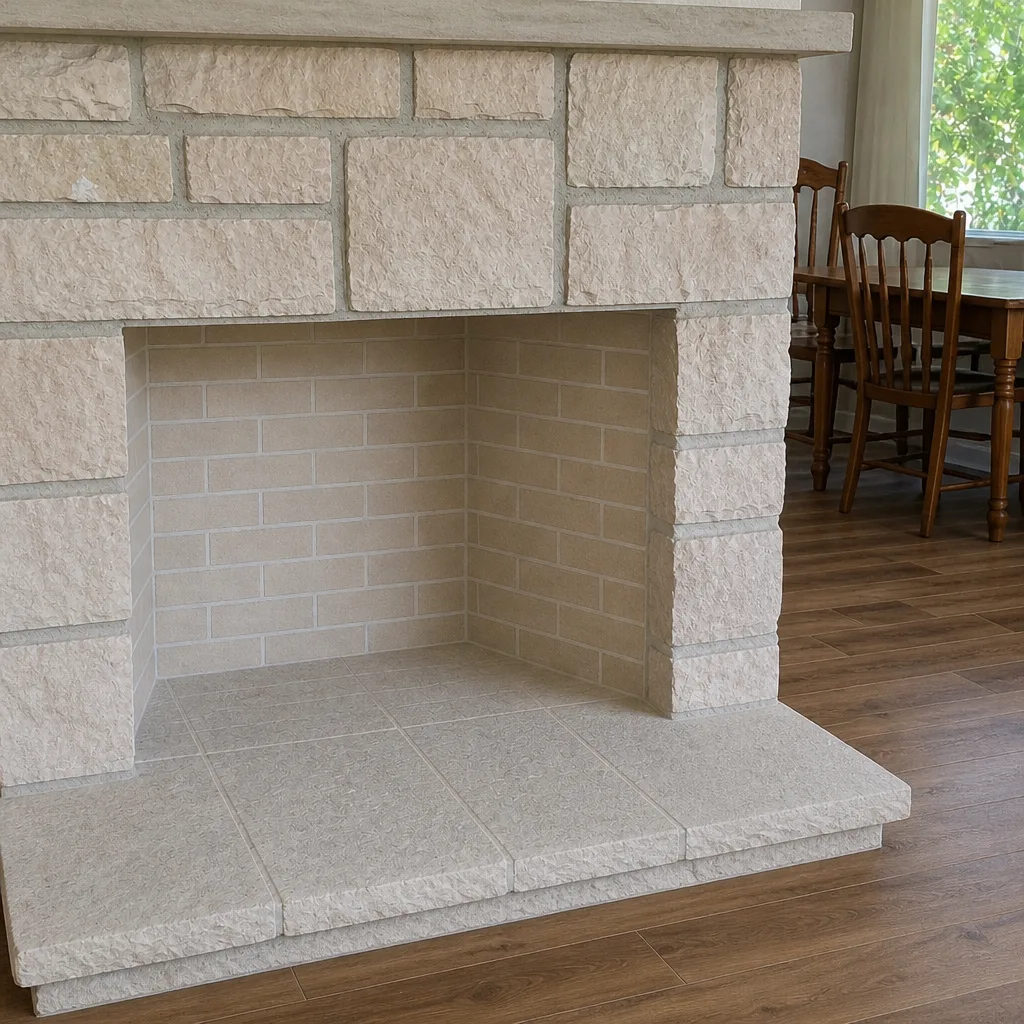
See the difference
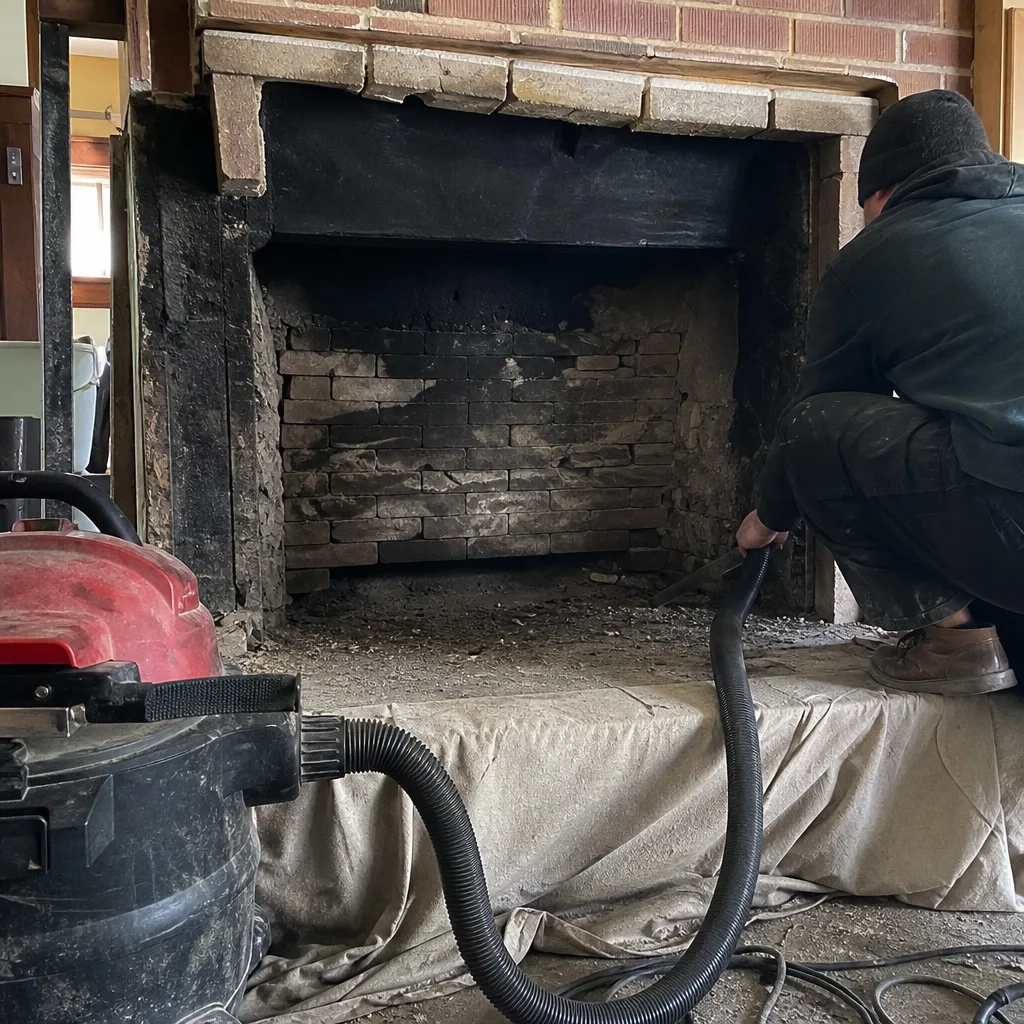 Before
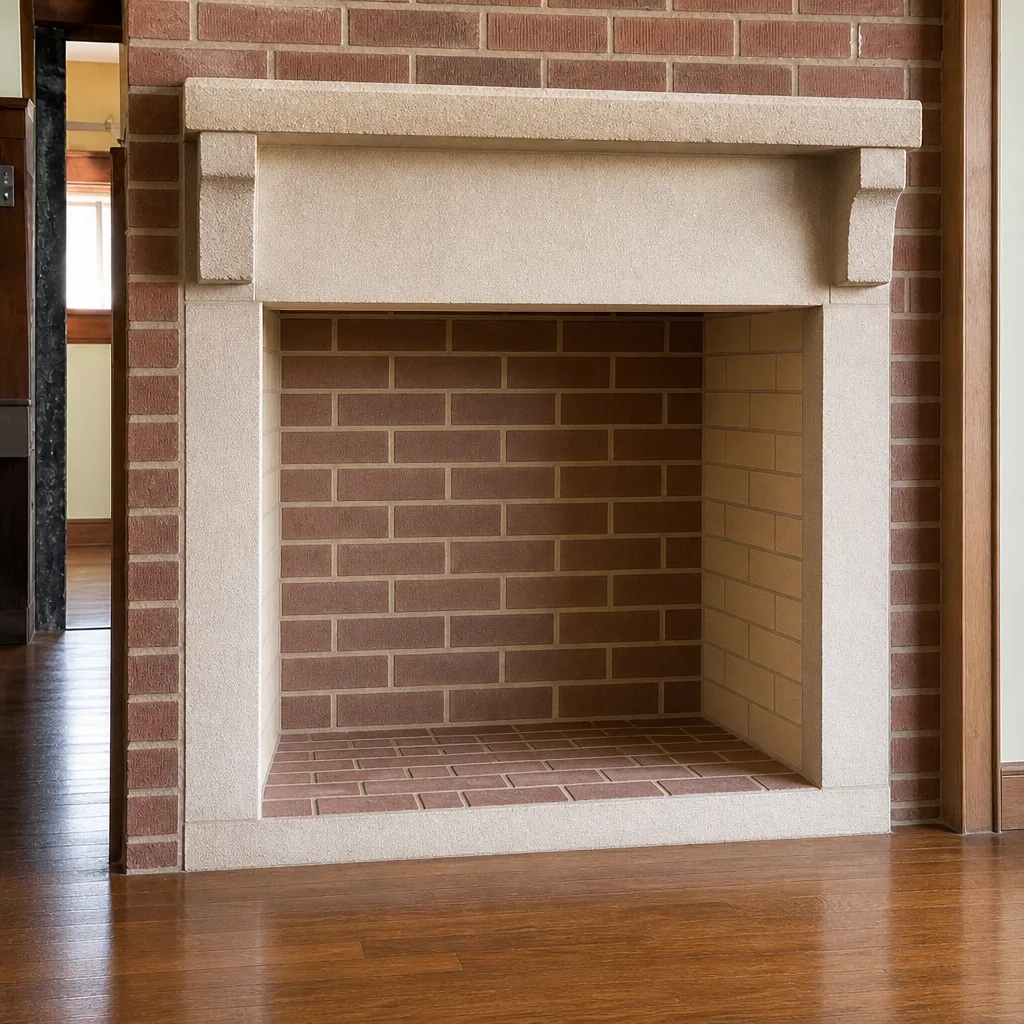 After
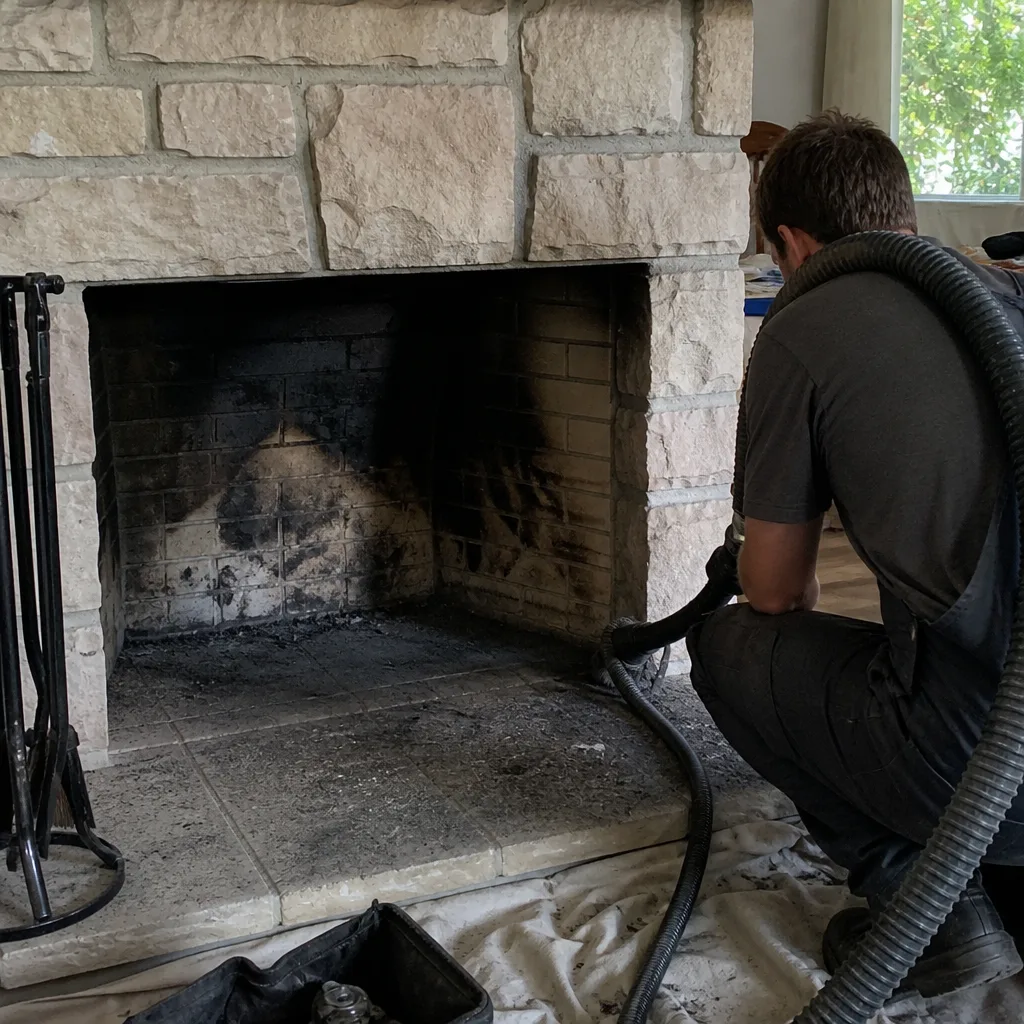 Before
 After
 Before
 After
When to Call a Professional
Call a certified sweep any time you can’t see the flue interior, which for most homeowners is always. Specific triggers: smoke spilling into the room when you light a fire, a draft that’s weaker than last season, a smell you haven’t had before, visible staining or rust near the hearth, efflorescence on exterior masonry, or any animal activity around the cap. Call after a serious chimney fire, and call before selling a home or responding to an insurer, since a written inspection documents the system’s condition. Call if you’ve switched appliances – an oil-to-gas conversion changes the flue’s venting needs. And call if you’re simply unsure; that’s what the inspection is for. Tundra Chimney Sweep offers free estimates in St. Paul – call (866) 942-6061. We answer 24/7. Fast dispatch from 7am to 7pm, Sunday through Friday.
Frequently Asked Questions
At least once a year, and more often if you burn hard. The annual visit should include an inspection, and the sweep itself is done as needed. A fireplace used casually may need cleaning every year or every other year; an oil furnace flue running daily through a Minnesota winter is a different interval. Call (866) 942-6061 for an exact schedule based on your appliance – estimates are free.
Yes. Gas doesn’t produce creosote, but the venting, termination cap, and internal components still need an annual look. Problems with gas venting tend to develop quietly. Book a check before the heating season and get the venting documented.
An inspection is an assessment: the flue is examined and the condition is documented in writing. A sweep is the cleaning itself. They’re done together, and the inspection is what decides whether the sweep is needed. Any visit that cleans without assessing is missing half the point.
You can often skip the cleaning, but not the inspection. A lightly used fireplace may not need a full sweep every year, and that’s fine – the inspection determines it. What you shouldn’t do is skip both. Call us and we’ll look, then tell you honestly whether the flue needs cleaning or whether the work can wait.
Call a sweep. Don’t try to clear it from the roof or from inside the firebox – nests pack into the flue and can block the draft entirely, and roof access is a fall hazard. A properly fitted cap from Gelco or Famco prevents the repeat. Book a visit and we’ll clear it and fit a cap.
Not always. A deteriorated flue liner can sometimes be resurfaced with HeatShield rather than fully replaced, which saves significant cost compared to a full reline. Whether your liner qualifies depends on its condition, so it needs to be inspected first. Call (866) 942-6061 and we’ll assess it – nothing gets recommended without evidence you can see.
The Bottom Line
Your chimney’s maintenance schedule should be built around three things: what you burn, how often, and which appliance is doing the burning. The annual sweep is the floor. The inspection is the decision point, and it’s the step most people skip – especially in spring, when it catches the problems that matter most. In St. Paul, where the heating season runs long, a daily burner and a casual fireplace don’t belong on the same clock, and the honest answer to “how often” depends on what’s actually in the flue. Book the inspection, get it documented in writing, and let the findings set the schedule instead of the calendar.
Ready to get on a schedule that fits your system? Call Tundra Chimney Sweep at (866) 942-6061 for a free estimate. We answer 24/7. Fast dispatch from 7am to 7pm, Sunday through Friday. Our technicians have up to 11 years of experience, and we handle chimney sweep, chimney repair, and inspection as one connected service, so you’re never coordinating between an inspector and a separate crew. Find out why homeowners across St. Paul trust the team at Tundra Chimney Sweep with their flues.
Written by the team at Tundra Chimney Sweep.