
Last updated November 16, 2026
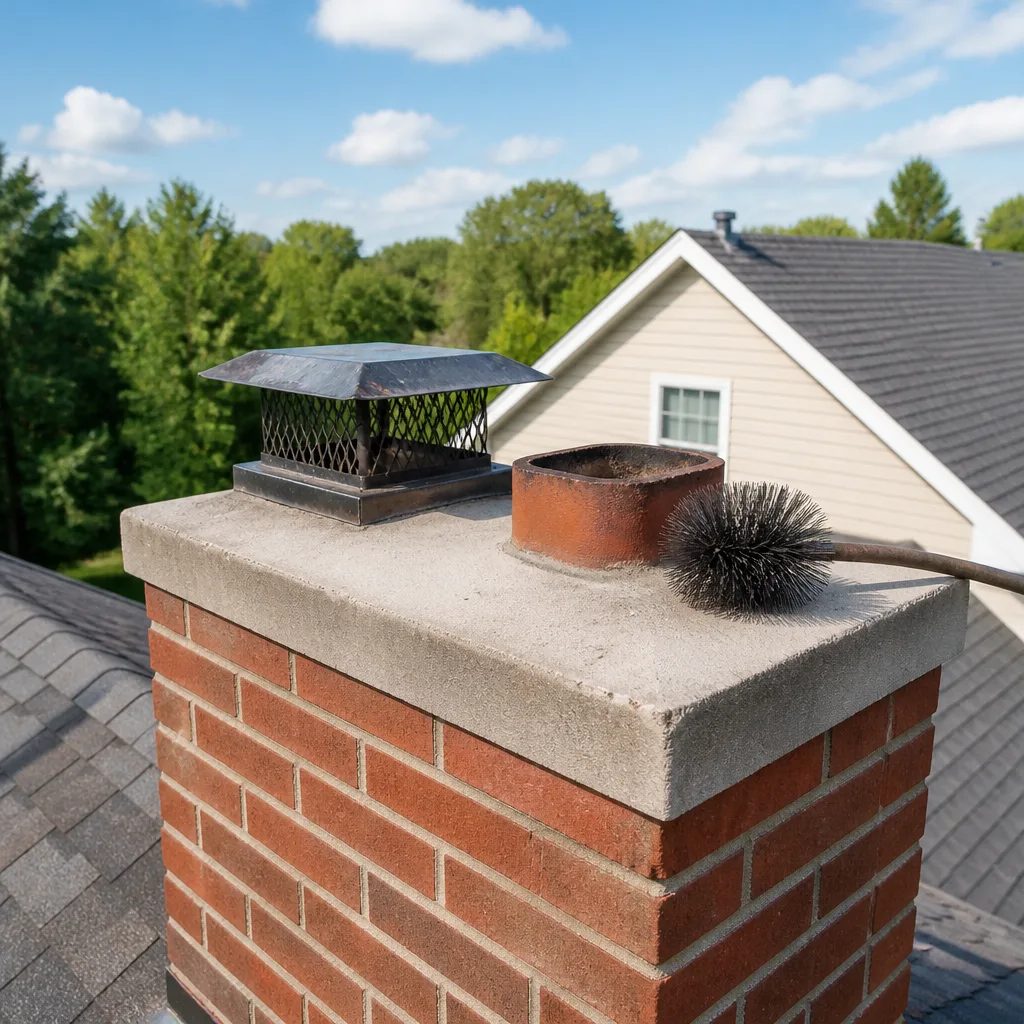 Sweep & inspection
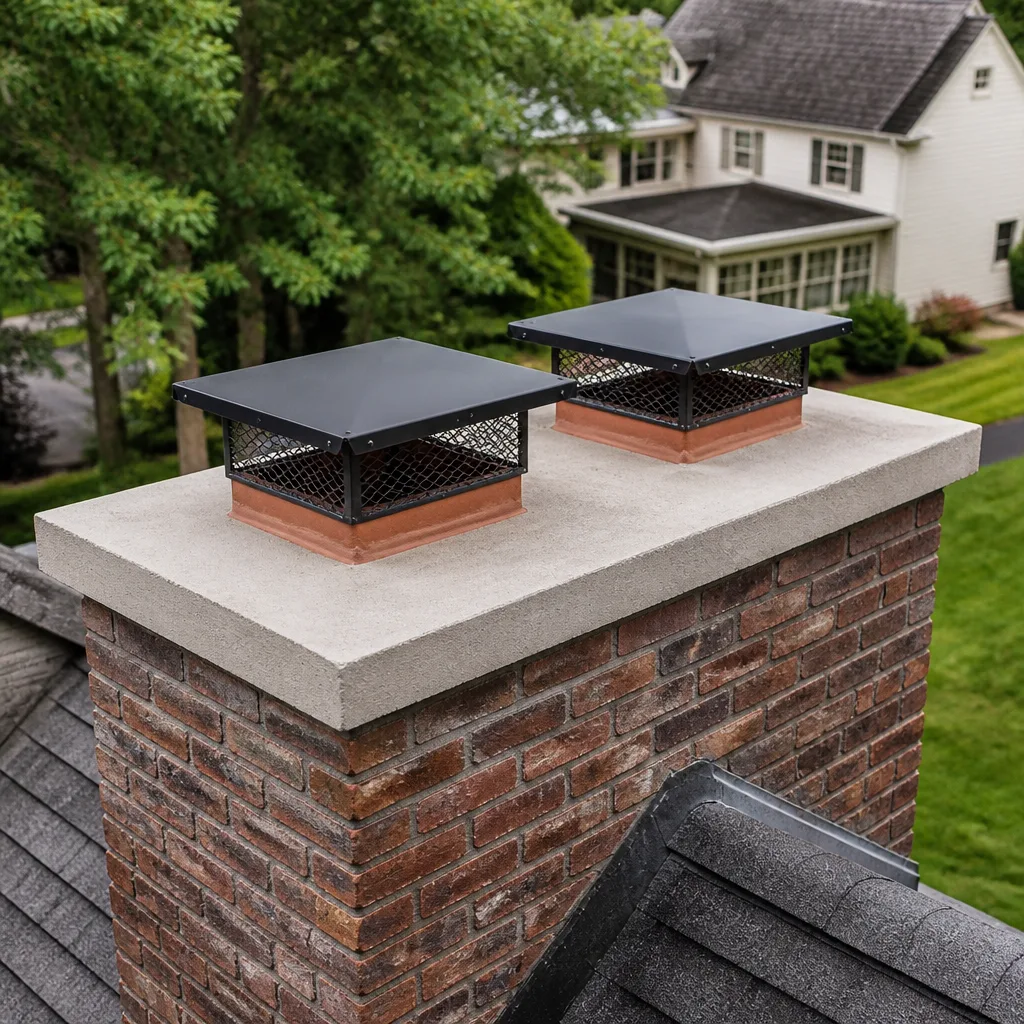 Caps & crowns
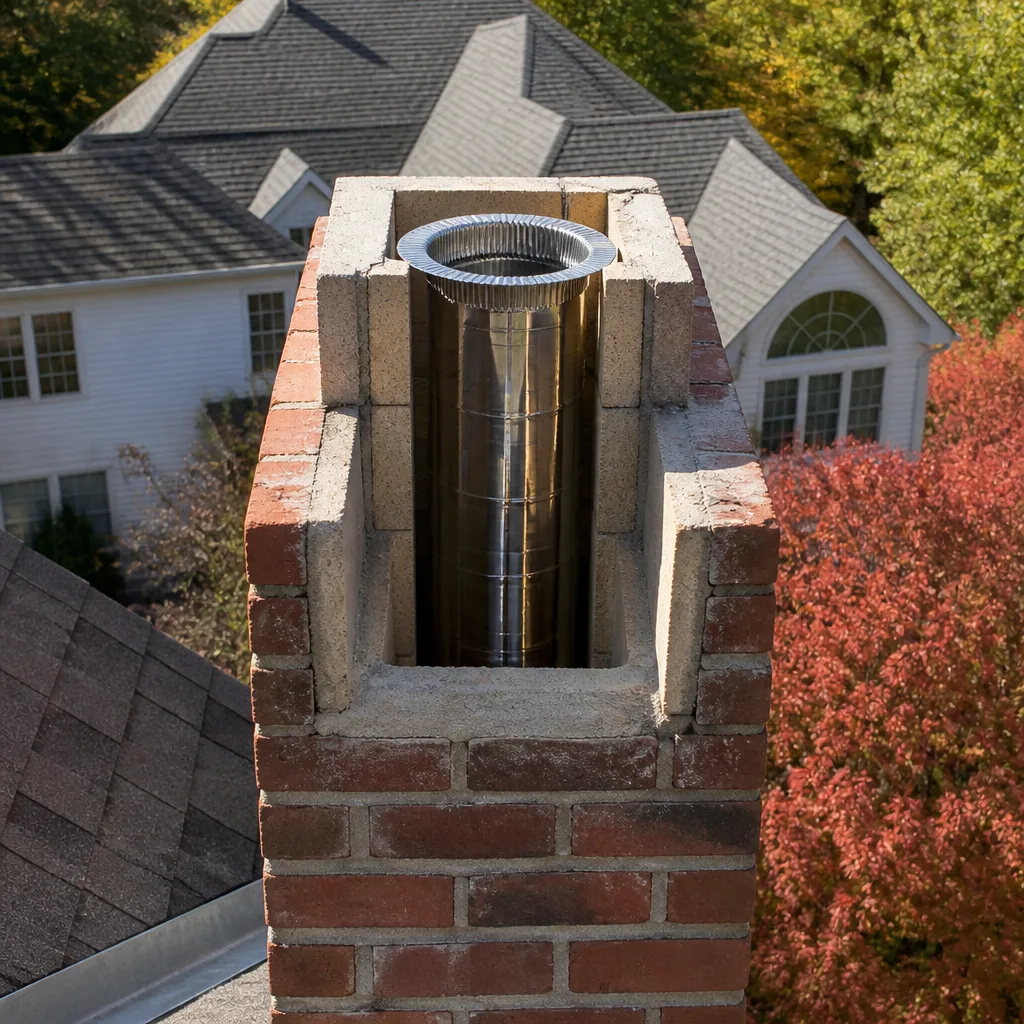 Flue relining
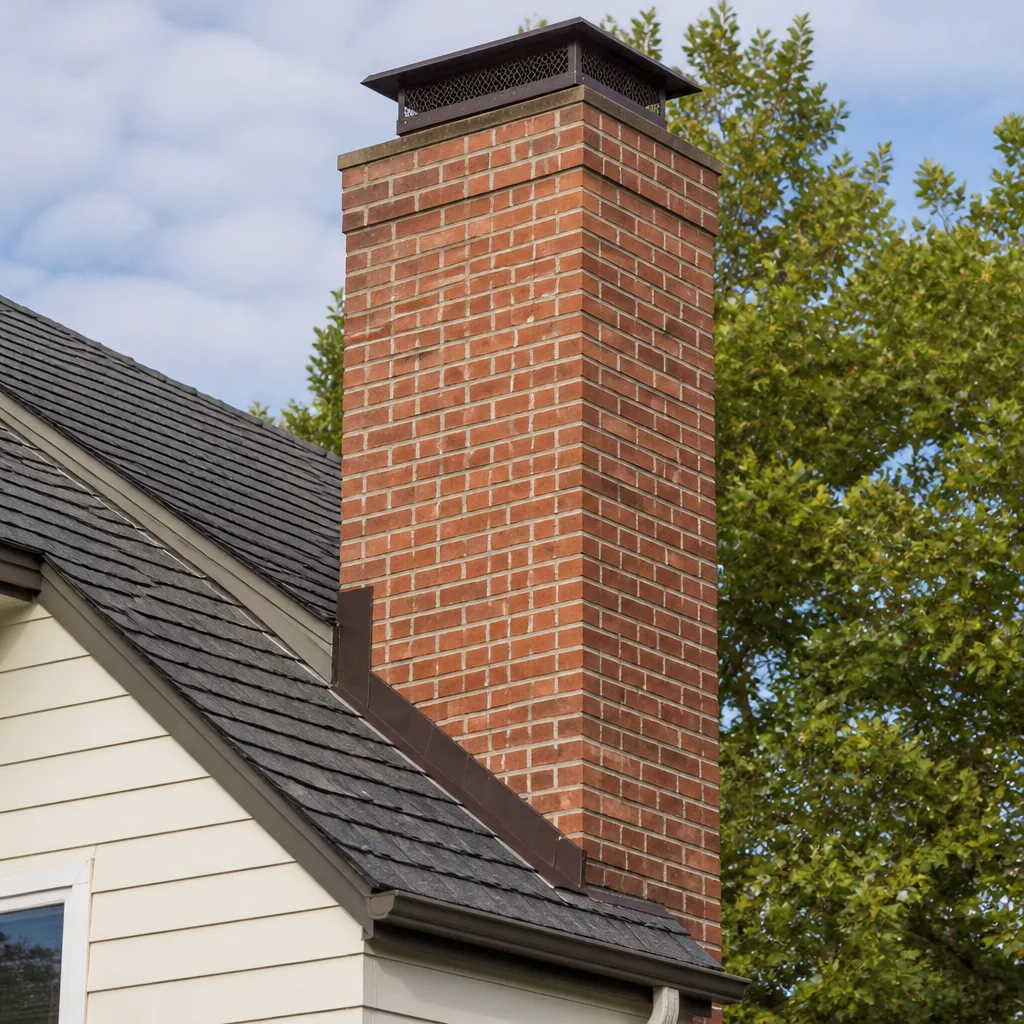 Masonry repair
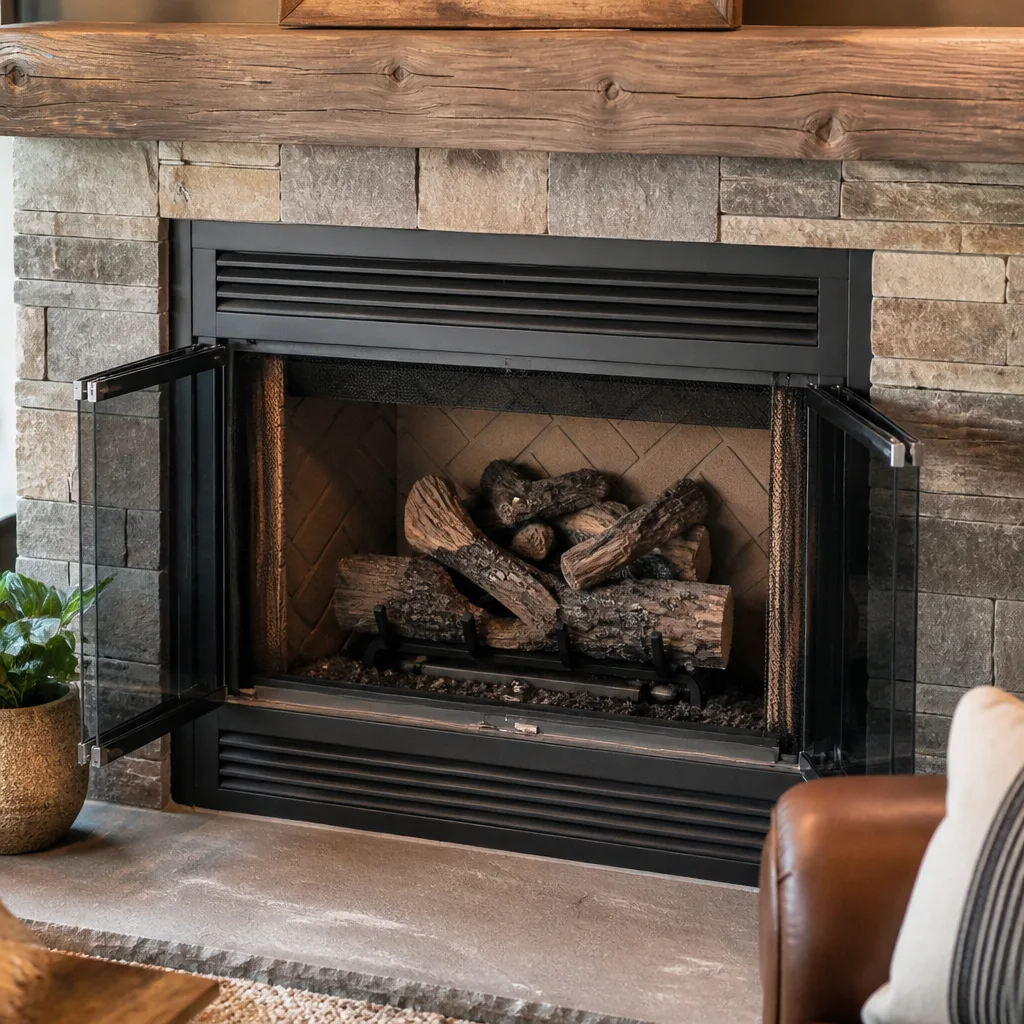 Gas fireplace service
Level 1 sweep and inspection to the NFPA 211 annual standard - flue, crown, cap, and flashing checked and photographed
Chimney sweep logs do not sweep chimneys. They loosen some creosote - which then falls where a brush and vacuum still have to collect it.
DIY vs Professional Chimney Cleaning: The St. Paul Homeowner’s Decision Guide
The chimney brush kit on the hardware store shelf is built for Stage 1 creosote on a modern prefab system. It was not designed for the 1940s clay-lined masonry fireplace in a South St. Paul bungalow, and that gap matters more than most buying guides admit. DIY chimney cleaning is a defensible choice under a narrow set of conditions: a newer system, light soot, and an owner honest enough to inspect what they can’t see. Most St. Paul homes don’t meet those conditions. This guide lays out exactly where the line falls, what you can check yourself, what you can’t, and how to decide without guessing.
Quick Answer
DIY chimney cleaning is reasonable only on a newer prefab or stainless-lined system with light Stage 1 creosote, and only if you can inspect the full flue afterward. For the clay-tile masonry flues common in older St. Paul neighborhoods, DIY sweeping removes surface soot but cannot address glazed creosote, liner cracks, or smoke chamber deterioration. In those homes, a professional sweep with camera inspection is the safer and more cost-effective path by the end of the season.
Styles & brands we work with
- Sweep & inspection
- Caps & crowns
- Flue relining
- Masonry repair
- Gas fireplace service
Table of Contents
- What Your Chimney System Actually Determines
- When DIY Chimney Cleaning Actually Works
- What You Cannot Assess Without Inspection Equipment
- Liability and Insurance After a DIY Cleaning
- The Real Cost of Doing It Yourself
- The Narrow Valid Case for Partial DIY
- Why St. Paul Housing Stock Changes the Math
- A Step-by-Step Decision Framework
What Your Chimney System Actually Determines
The single biggest factor in the DIY question isn’t your willingness to climb a roof. It’s the composition of the flue itself. A factory-built prefab fireplace with a stainless steel liner behaves very differently from a hand-laid brick chimney with clay tile liners, and the two demand different cleaning tools, methods, and expectations.
Here’s how the major system types break down for a homeowner weighing a DIY sweep:
- Modern prefab with stainless liner: Smooth interior, consistent diameter, accessible from the top with a standard poly brush. DIY is technically feasible when the deposit is light.
- Clay-tile masonry flue: Mortar joints between tiles create ledges where creosote collects. Brushing can chip tile edges if the brush is too stiff. The flue also often has offsets and an oversized smoke chamber the brush can’t properly reach.
- Older brick flue with no liner: Common in pre-war St. Paul homes. Bare brick is rough, absorbs creosote, and can’t be reliably cleaned to bare surface without damaging mortar. DIY on these is not advisable.
- Oil or gas heating appliance flue: Different deposit chemistry, different venting rules, and a corrosion concern a brush kit doesn’t address. This isn’t a firewood-chimney situation.
If you don’t know which of these you have, that’s the first question to answer. A professional chimney sweep can identify the system type during the first visit and tell you plainly whether it’s a DIY candidate at all. In our experience, most homeowners assume their system is more DIY-friendly than it turns out to be.
When DIY Chimney Cleaning Actually Works
DIY works when all four of these conditions are true at once:
- The system is a prefab or stainless-lined appliance with a smooth, consistent interior and no offsets the brush can’t navigate.
- The deposit is Stage 1 creosote – dry, flaky, and easily dislodged. If the deposit is sticky, gummy, or glazed, the brush will smear it rather than remove it.
- You can access the full flue from the top and the bottom, sweep it clean, and inspect it with light and mirror afterward.
- You’re honest about what you found. If you see black glaze, cracked tile, or gaps in the mortar, the DIY path ends there.
Note that three of those four conditions depend on facts you may not know until you’re already on the roof. That’s the structural problem with DIY as a default plan: it only reveals its own failure after you’ve done the work.
The four conditions don’t often line up
What we see on the systems that are genuinely DIY-appropriate: the deposit is thin, the flue is straight, and there’s a cleanout within reach. What we see on the systems that aren’t: glaze near the top third where the flue cools fastest, a crown that’s failed and is letting water in, or a firebox with a cracked panel that the homeowner never noticed because it was behind the grate.
If a homeowner’s own inspection would catch those issues, DIY can be safe. If it wouldn’t, sweeping without a full inspection just buries the problem another season. That distinction is the whole decision in one sentence.
What You Cannot Assess Without Inspection Equipment
A brush and a flashlight will tell you whether the flue looks sooty. They won’t tell you the things that actually determine whether your chimney is safe to burn in another season. These are the three most consequential blind spots:
Liner cracks
Hairline cracks in clay tile liners are essentially invisible from the firebox with a handheld light. They’re visible on camera. A cracked liner lets heat and combustion gas reach the wood framing and insulation around the chimney chase, and that’s the pathway most chimney-related structural fires follow. You can’t find one with a brush.
Smoke chamber deterioration
The smoke chamber is the sloped area above the firebox, above your damper, and below the flue. It’s almost never visible from either end without a camera, and its mortar joints are exactly where creosote accumulates and spalling begins. Most DYI-adjacent chimney problems start here, and the homeowner has no view of it.
Connector seal condition
For wood stoves and inserts, and especially for oil and gas heating appliances, the connector pipe and its seals are a whole separate inspection. A loose connector or a failed gasket is a carbon monoxide path. That’s not a cleaning task; that’s a diagnostic one, and it belongs with a professional who has the tools and the mandate to check it.
Professional chimney repair starts, in our process, with a camera inspection and photo documentation of the flue and smoke chamber. What we find either clears the system or tells us what needs to happen next. In our experience, most homeowners who thought they only needed a sweep walk away knowing something they couldn’t have discovered on their own.
Liability and Insurance After a DIY Cleaning
This is the part of the DIY decision that almost nobody explains clearly, and it has real consequences.
Most homeowners insurance policies cover chimney fires when the loss is accidental and maintenance has been reasonable. What insurers increasingly ask for, after a chimney fire claim, is evidence that the chimney was maintained and inspected. A professional inspection report – documented in writing, with photos – provides that evidence. A homeowner who swept the chimney themselves last fall has nothing comparable to show.
That doesn’t mean every DIY cleaning voids coverage. It means the burden of proof shifts after a loss, and you’re the one holding it. If the insurer’s adjuster asks when the chimney was last inspected and by whom, “I swept it myself in the fall” is a weaker position than a written report from a qualified inspector.
Other scenarios that compound the risk:
- Selling the home: A buyer’s inspector will ask for chimney documentation, and a professional inspection report is what satisfies it. DIY leaves a gap.
- Equipment or tool damage to the flue: A brush that chips tile or a rod that scuffs the smoke chamber is a repair cost you own.
- Roof access: A slip on a St. Paul roof in winter is an injury on your policy, not on the chimney company’s.
Call (866) 942-6061 if you want to talk through what your insurer will actually look for. We answer 24/7. Fast dispatch from 7am to 7pm, Sunday through Friday.
The Real Cost of Doing It Yourself
The honest comparison isn’t “kit at the hardware store vs. service call.” It’s total cost of ownership across a season, and the equipment, time, and inspection step usually close the gap. Use this line-item comparison:
- Brush kit and rods (prefab only): modest up-front cost, and acceptable on a smooth liner. Rods and brushes wear out and need replacing every few seasons.
- Drop cloths, dust protection, and cleanup materials: the soot that escapes is fine dust that gets into every surface in the room. Proper containment is not optional.
- Creosote disposal: sweepings are flammable and have to be bagged and handled correctly, not left in a trash can.
- Time: a full flue from top and bottom is a real half-day for a first-timer, and a re-do if the deposit doesn’t come off.
- Inspection: the step DIY can’t replace. A sweep without inspection is incomplete maintenance.
What we hear from homeowners who’ve priced this out is that the DIY route saves the most on the first sweep and progressively less on each one after, because the inspection gap keeps widening. And a failed inspection in a St. Paul home – whether it’s a real estate sale or a post-fire insurance review – is a much more expensive problem than the sweep itself.
We set every job at a flat price with a written estimate. Nothing is added without evidence you can see.
The Narrow Valid Case for Partial DIY
There is a legitimate middle path, and it’s worth spelling out because most guides skip it.
Homeowners can do preliminary work that reduces the professional’s time without touching anything that requires a trained eye. Here’s what that looks like:
- Clear the firebox and hearth fully before the technician arrives, including ash removal. This is safe work and it saves time on cleanup.
- Remove the grate, log holder, andirons, and screen so the firebox is accessible from the start.
- Provide access to the roof or the cleanout, whichever your system uses, including clear paths and unlocked gates.
- Note anything unusual – smells, smoke rollback, drafts, staining above the mantel – and tell the technician what you saw. That observation is worth more than anything a brush kit catches.
- Where a newer prefab system has a light deposit, and only there, brushing the accessible portion of the flue can reduce the depth of the professional visit while the camera inspection still happens at the end.
What you should not do even in the partial case: disconnect connector pipes on a gas or oil appliance, climb onto the roof in icy conditions, or use a brush on a clay-tile flue with visible damage. Those are the situations where the labor savings disappear into the repair bill.
Why St. Paul Housing Stock Changes the Math
St. Paul’s housing stock tilts the DIY calculus against the homeowner more than in many metro areas. The city’s older neighborhoods – from the brick four-squares of the West Side to the bungalows in Highland Park and the Victorians around Cathedral Hill – are dominated by masonry fireplaces with clay-tile liners that have often been swept multiple times over decades and show the accumulated wear of it. Those liners don’t clean to bare surface with a homeowner brush, and the rough interior increases creosote adhesion.
Then there’s the cold. St. Paul’s heating season is long, and the flue runs hot then cold then hot again, which is the cycle that drives creosote condensation on the upper flue and causes the glaze that a brush can’t remove. In our experience, a homeowner getting ready for the burning season here has more ugly surprise waiting in the flue than they would in a milder climate. We spec our work for cold-weather performance because that’s what the system has to survive, and we see the difference on the repair side.
Two more St. Paul-specific factors matter:
- Weather transitions: The freeze-thaw cycle here cracks masonry crowns and joint mortar. A homeowner sweeping in the fall may miss a crown repair that a technician would have caught.
- Alley and roof access: Many St. Paul homes have steep roofs, tight alleys, and icy gutters. Roof access on a home like that is genuinely a professional task, not a quick DIY climb.
None of this is a pitch to skip DIY because we say so. It’s an observation about what a local St. Paul sweep finds on the systems most DIY homeowners in this city are trying to clean, and why the standard hardware-kit approach often falls short here.
A Step-by-Step Decision Framework
Here’s the process that gets a homeowner to the right call. Work through it in order and stop at the first “professional” answer:
- Identify your system. Prefab, stainless-lined masonry, clay-tile masonry, or unlined brick. If you don’t know, that’s a professional inspection.
- Look at the deposit with a light. Dry and flaky is Stage 1, and a DIY sweep may be viable. Sticky, gummy, or glossy means the brush smears it and the professional gets called. Glazed creosote is a professional removal situation and can require chemical treatment or resurfacing with a product like HeatShield to correct the flue surface afterward.
- Check whether the deposit is isolated. If it’s concentrated at the top of the flue, the flue is running cold and the cause is structural. That’s an inspection question, not a cleaning one.
- Assess access. Can you get safely onto the roof and to the cleanout? If the answer involves snow, ice, or a steep pitch, stop and book a professional.
- Do the sweep, then inspect with light and mirror. If you see cracks, spalling, gaps, or a smoke chamber you can’t see fully, book a full camera inspection before your next fire. Gelco and Famco caps and properly fitted terminations go in at that point too; a top that isn’t sealed is letting water and animals in, and no amount of sweeping fixes that.
- Document what you did. Keep the date and any observations in writing. That record matters if you ever file an insurance claim or sell the home.
Common Mistakes to Avoid
- Buying the wrong brush for the flue. A metal brush on clay tile can chip the liner edges. A too-soft brush on a brick flue does nothing. The brush has to match the flue material.
- Sweeping the flue and calling it a season. The flue is a system, and the smoke chamber, connector, and cap are part of it. Brushing the flue without the inspection step leaves the parts most likely to fail unexamined.
- Assuming a prefab means safe DIY forever. The liner in a prefab ages. A system that was fine for a DIY sweep five seasons ago may not be this year, and the only way to know is to look with a camera.
- Ignoring the creosote on the chamber and damper. A homeowner can sweep the flue the eye can reach, but not the smoke chamber. Creosote accumulates there too, and that’s where chimney fire ignition is most likely to start.
- Doing a fall sweep after a cold snap on a clay-tile system. The glaze that forms in a St. Paul cold snap is the hardest creosote to remove. If you’re sweeping in October and finding it gummy, book a professional for the removal.
- Climbing a snow-covered St. Paul roof without a fall-arrest setup. Slips are the number one injury risk in chimney work, and a homeowner with a brush kit doesn’t have the harness.
- Treating the insurance question as an afterthought. If you DIY, keep records. If a fire ever happens, you want more than your memory of what you did.
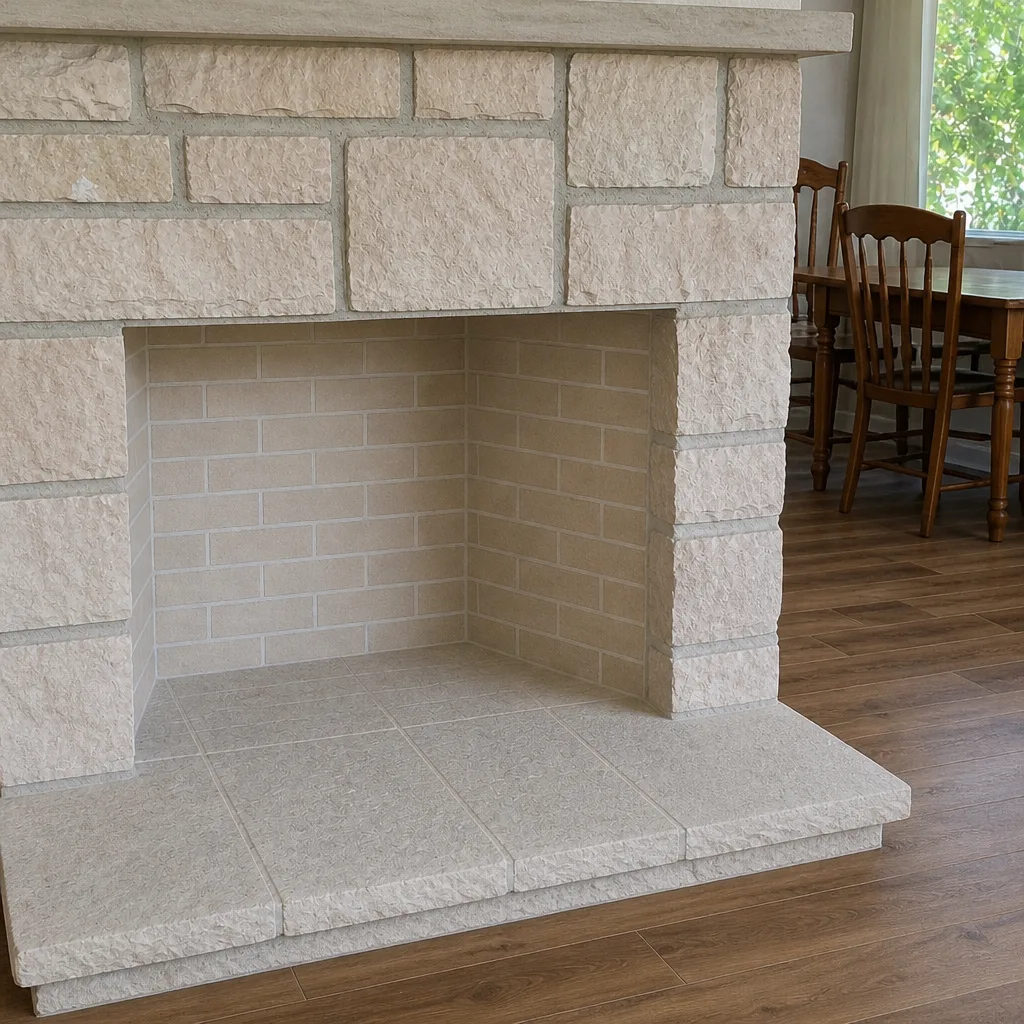
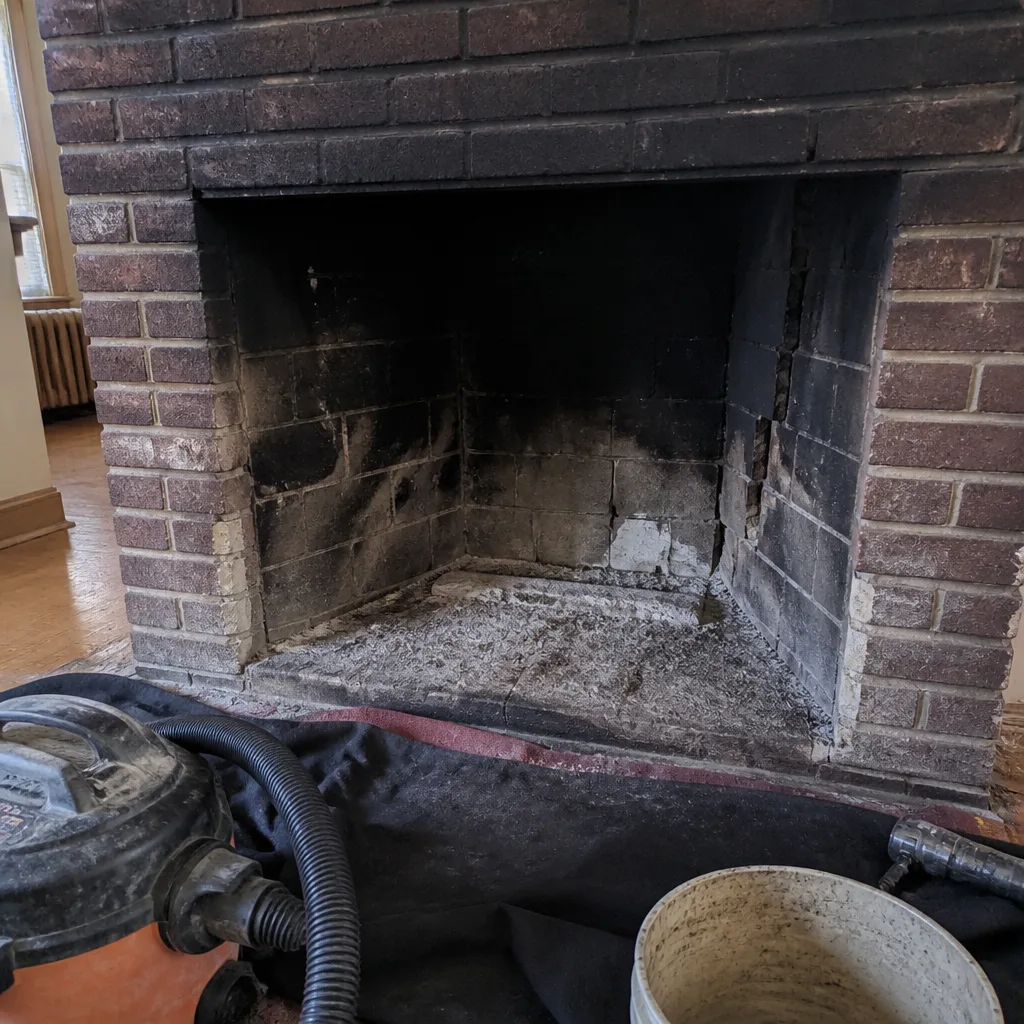
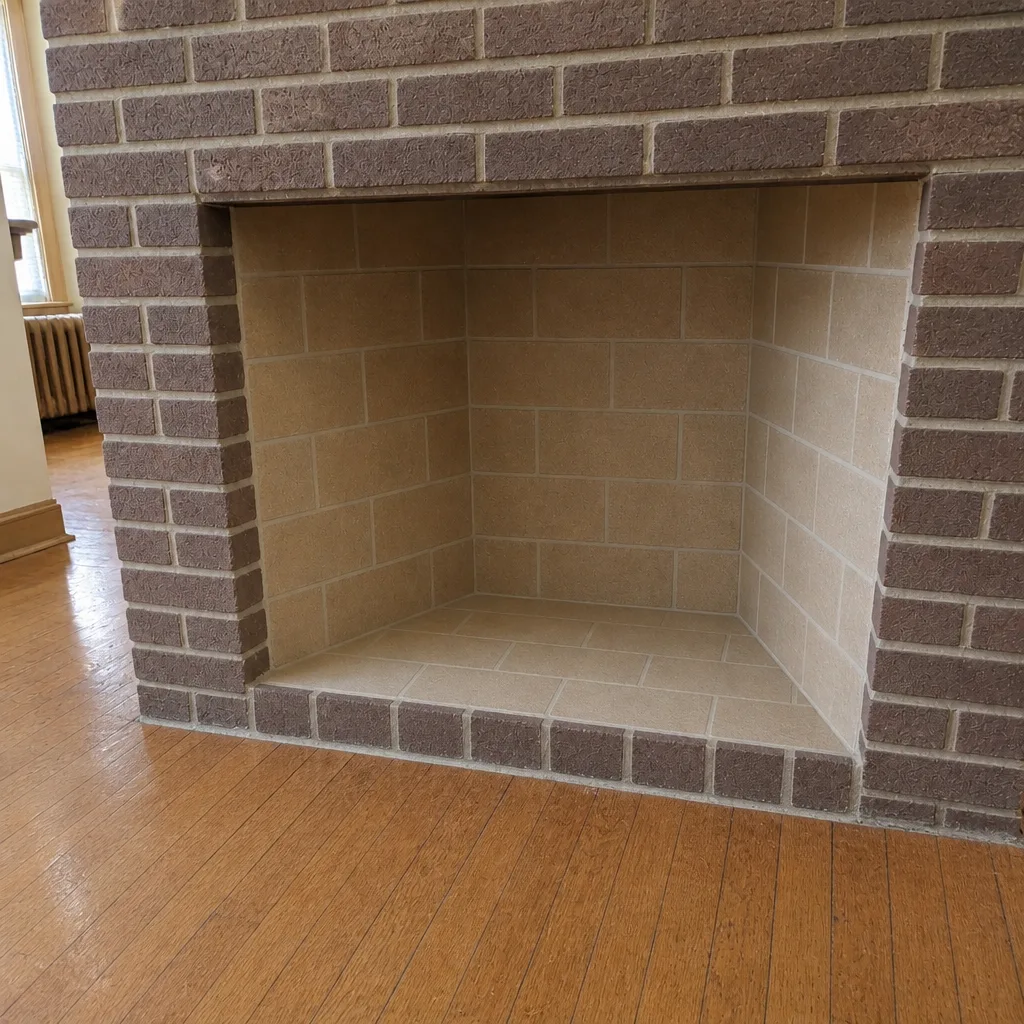
See the difference
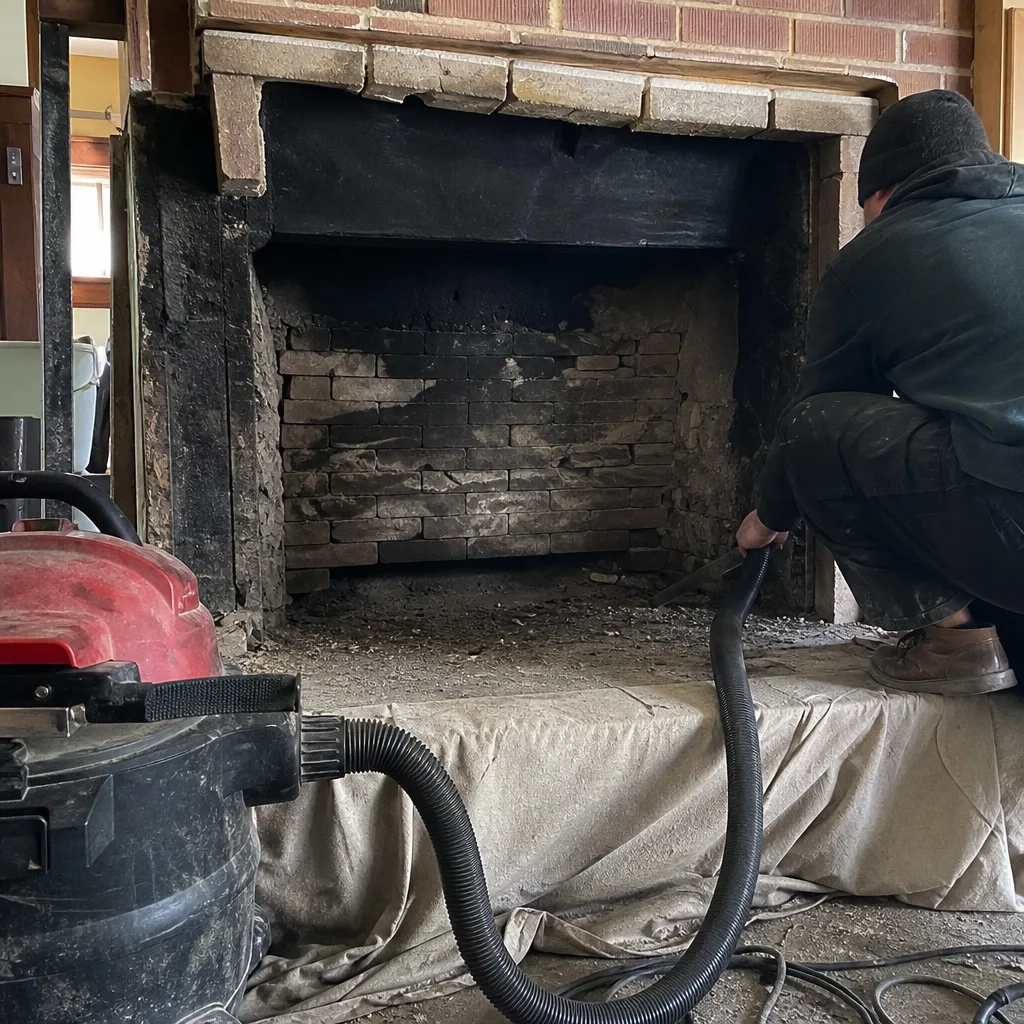 Before
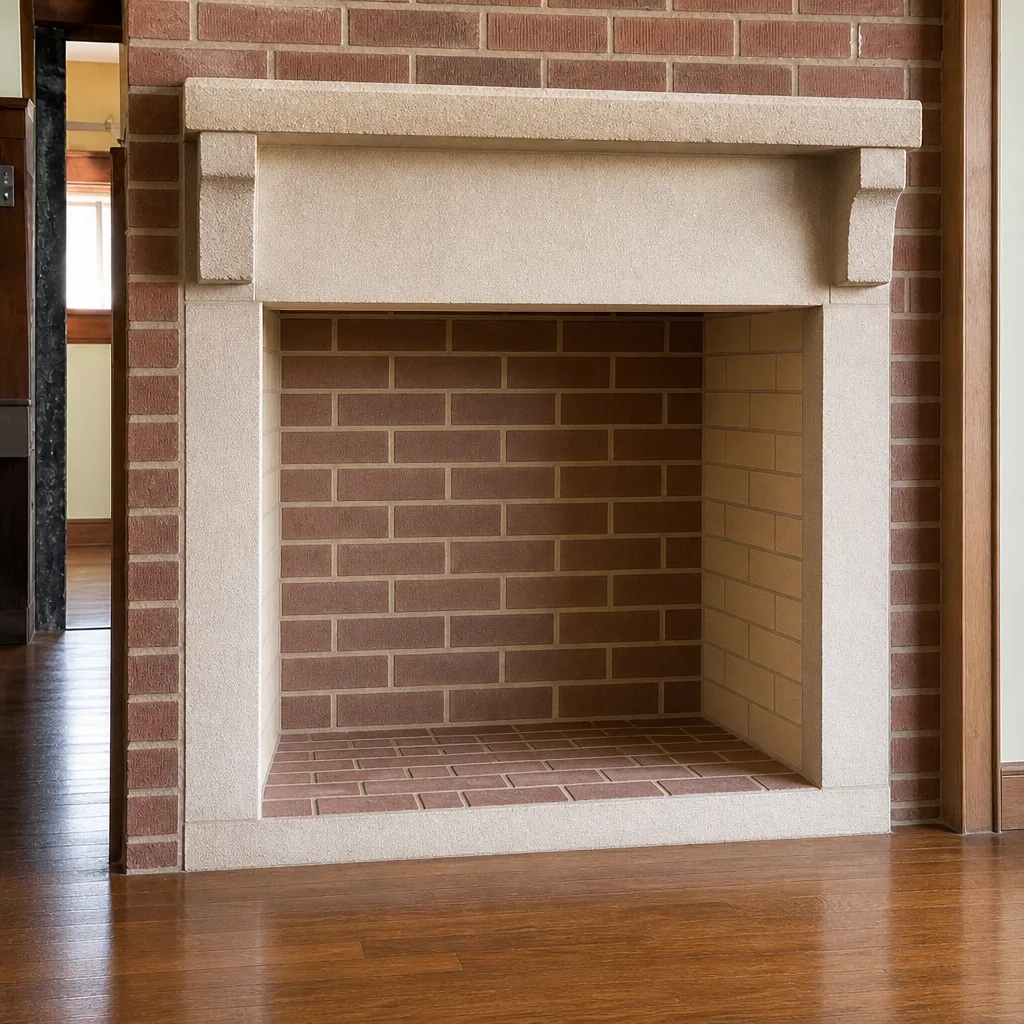 After
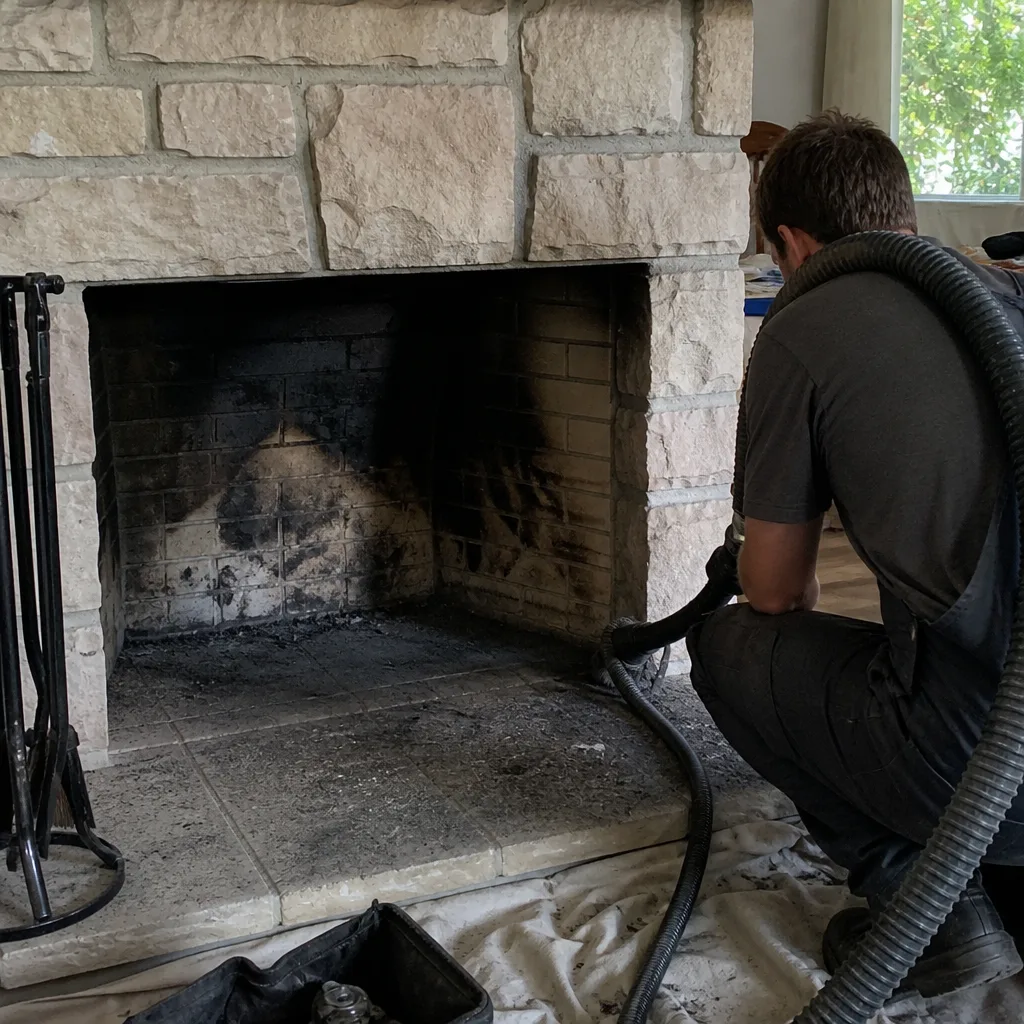 Before
 After
 Before
 After
When to Call a Professional
Call a professional for any of these: a clay-tile or unlined masonry system, glazed or gummy creosote, a roof you can’t safely access, a smoke chamber you can’t see from either end, a gas or oil heating appliance, a connector you can’t inspect honestly, a home sale or insurance inspection, or a system you’ve never personally had inspected. Those aren’t edge cases in St. Paul; they’re the typical case. Our technicians have up to 11 years of experience, and we document every system in writing so you have a record. Tundra Chimney Sweep offers free estimates in St. Paul, so call (866) 942-6061 to book a sweep.
Frequently Asked Questions
A chimney sweep in St. Paul is priced per job, and we set the price in a written estimate before booking. There’s no service-call fee, no dispatch fee, and no charge for the estimate. The written estimate is the final price, so you know what you’re paying before anyone climbs a ladder. Call (866) 942-6061 for an exact quote – estimates are free.
You can clean a modern prefab or stainless-lined system with light Stage 1 creosote, and only if you can inspect the full flue afterward. You cannot safely clean a clay-tile masonry flue with glaze, an unlined brick flue, or a system with a damaged liner. If you’re not sure which of those you have, that’s the first question to answer, and it’s a professional one.
Sweep when the deposit reaches roughly a quarter-inch, which in a St. Paul heating season usually means once a year for the main wood-burning appliance, and sooner for heavy burners or when the flue shows glaze. A professional sweep at the start of burning season with a full inspection is the standard. Skipping a season here is not a mild risk; the deposit accumulates faster in cold cycling than most people expect.
Creosote builds in layers, and the glaze that forms in stages 2 and 3 is what ignites in a chimney fire. Carbon monoxide can also backdraft through a restricted flue, which is the more serious immediate hazard in a tight St. Paul home. Neither hazard is visible from the room. Call (866) 942-6061 for a sweep and camera inspection – estimates are free.
No, not always – and we won’t tell you that you do without evidence. A cracked liner or one that’s substantially deteriorated needs a repair, but the inspection report tells us which. Some flues can be resurfaced with HeatShield instead of fully relined, which is a cheaper repair path and something we specify when the flue condition allows it. If the repair can safely wait a season, we say so. Call (866) 942-6061 for an honest assessment – estimates are free.
It may, but the burden of proof is higher. Insurers typically want evidence the chimney was maintained and inspected, and a written inspection report is what satisfies that. There’s no report from a DIY sweep, so the position after a loss is weaker. A professional Tundra Chimney Sweep inspection documents the system’s condition and can be provided to your insurer before there’s ever a claim.
The Bottom Line
DIY chimney cleaning is a defensible choice under four specific conditions: a prefab or stainless-lined system, light Stage 1 creosote, safe access from top and bottom, and an honest self-inspection afterward. In St. Paul, most of those conditions fail on older clay-tile systems, and the deposit chemistry of a long cold season makes the failure more common than a homeowner expects. The partial-DIY path – clear the firebox, note what you see, and book the professional sweep and camera inspection – captures the cost savings without losing the evidence you’ll need if you ever file a claim. Our technicians have up to 11 years of experience, we use professional-grade components from Olympia Chimney and Copperfield when a repair is called for, and our inspection report is written and photographed for real estate and insurance use.
If you’re ready to stop guessing, call (866) 942-6061 for a free estimate. We answer 24/7. Fast dispatch from 7am to 7pm, Sunday through Friday. And if the honest answer is that your system can safely wait a season, we’ll tell you that too.
Written by the team at Tundra Chimney Sweep.