
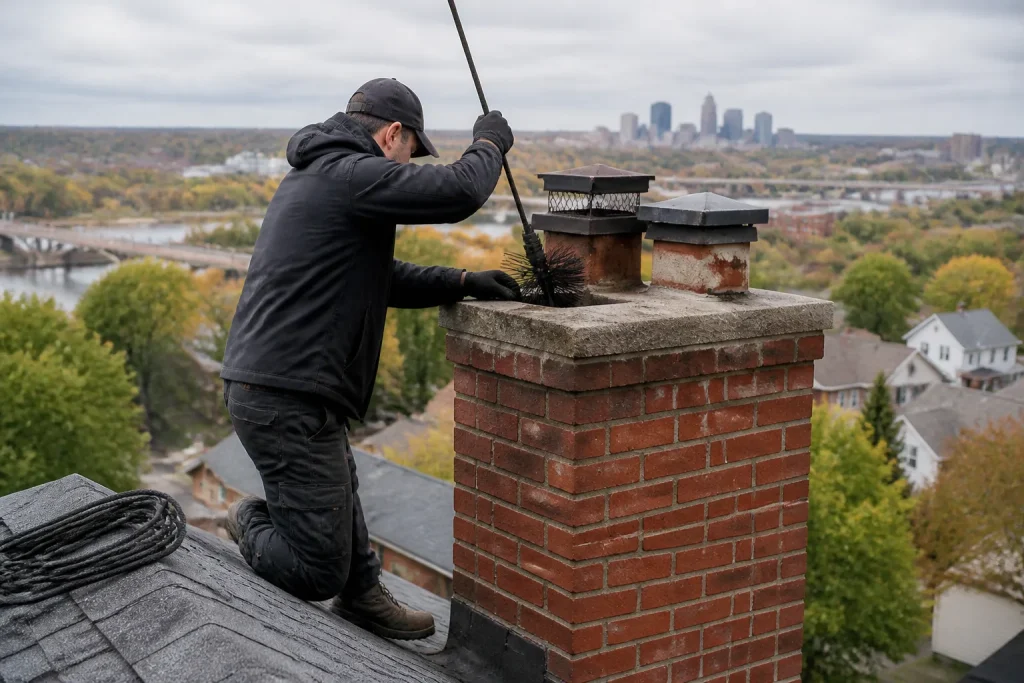
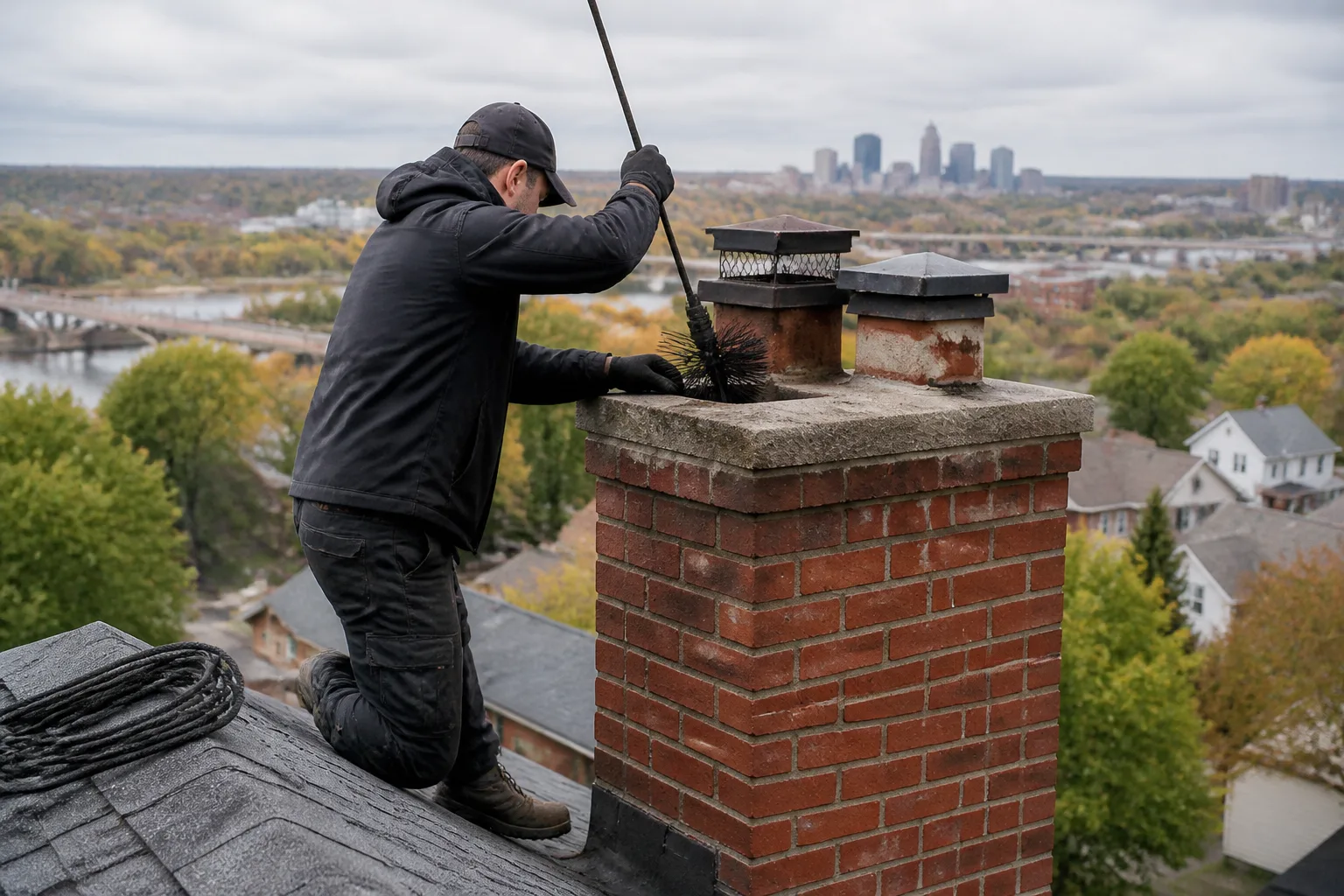
HeatShield Chimney Sweep in St. Paul: A Homeowner’s Guide
A cracked terra cotta flue tile sounds like an automatic liner replacement. In many St. Paul chimneys, it isn’t. HeatShield resurfacing can restore a deteriorated clay flue to a smooth, code-recognized liner surface at a fraction of the cost of a full stainless reline, and most homeowners never learn this option exists. If you’d rather not sort through the difference yourself, call (866) 942-6061 and we’ll walk you through what your flue actually needs.
What Is HeatShield, and How Is It Different From a Stainless Liner?
HeatShield is a castable ceramic resurfacer. A trained applicator pulls a sizing bladder down the flue, applies the ceramic material to the interior clay surface, and the liner cures into a hard, smooth shell that seals cracks and restores the flue’s original shape. It is not a patch, a paint, or a caulk job. It is a structural resurfacing system that restores the inside of the existing clay liner rather than replacing it.
A flexible stainless liner, by contrast, is a new pipe. We install DuraFlex liners because the system handles the technically demanding relines – oil-to-gas appliance conversions, oversized masonry flues, and flues where the existing clay is too far gone to resurface. Those are real jobs, and sometimes a stainless liner is the only correct answer. But it is a bigger, more expensive intervention than most early-stage tile damage requires.
The practical difference for a St. Paul homeowner:
- HeatShield keeps your existing flue and restores its interior. Cost is lower, the chimney footprint doesn’t change, and there is no new pipe to route through the masonry.
- Stainless liner inserts a new flue inside the old one. It’s the right call when the clay is missing sections, offset, or structurally compromised.
The choice isn’t a preference. It’s a specification question, and it should be answered from an inspection report, not a sales visit.
When Is HeatShield the Right Specification?
HeatShield is specified for specific damage profiles. It is not a universal fix, and any technician who tells you otherwise is either inexperienced or selling. Here’s where it earns its place in a St. Paul flue:
- Hairline cracks in terra cotta tiles – the most common failure we see in older masonry chimneys, and the profile HeatShield was designed for.
- Surface spalling, where the interior face of the tile is flaking but the tile body is intact.
- Deteriorated mortar joints between tiles, where the joints have eroded but the tiles themselves are still positioned correctly.
- Rounded or slightly irregular flue interiors that would benefit from being smoothed to improve draft and reduce creosote accumulation.
Where HeatShield cannot be used is just as important: missing tile sections, offset or misaligned flues, and any flue with full structural collapse. In those cases, resurfacing has nothing to bond to, and a stainless liner is the correct path. This is where an honest inspection matters more than any product decision – a flue that can’t take HeatShield shouldn’t be sold HeatShield, and a flue that can take it shouldn’t be sold a full reline it doesn’t need.
Why St. Paul’s Freeze-Thaw Cycle Makes Early Intervention Smart
St. Paul’s climate is hard on masonry. Repeated freeze-thaw cycles work moisture into the tile body and mortar joints, then expand it, then release it, season after season. That cycle is the primary driver of the hairline cracks and surface spalling that HeatShield is designed to correct. A crack that’s cosmetic this heating season is a crack that has widened by the next one.
This is where the economics get interesting. Addressing early-stage tile deterioration with HeatShield costs meaningfully less than waiting for the flue to fail to the point where a full stainless reline becomes the only option. The freeze-thaw cycle doesn’t pause while a homeowner thinks about it. Resurfacing the flue while the tile body is still sound is the lower-cost intervention, and it’s the one that keeps the chimney in its original configuration.
Moisture is the other factor. A smooth, sealed HeatShield surface sheds condensate more readily than a rough, spalled clay interior, which reduces the moisture that feeds both freeze-thaw damage and creosote buildup through the heating season. A chimney sweep in St. Paul who understands the local climate should be specifying for that reality, not for a mild-weather market.
Why Certification and Documentation Matter for Insurance and Home Sales
A HeatShield job is only as good as the applicator and the paperwork behind it. HeatShield certification is a specific credential, and not every sweep in St. Paul holds it. A certified application follows the manufacturer’s process for surface prep, bladder sizing, material thickness, and cure time. An uncertified “HeatShield-style” job is a different product with a different outcome, and it won’t carry the manufacturer’s documentation.
That documentation matters in two places homeowners don’t always think about until it’s too late:
- Insurance. If your insurer asks for proof that the flue was restored to a code-recognized standard, a properly documented HeatShield application is the paper trail. A verbal “we fixed it” is not.
- Home sale. A Level 2 inspection report that documents a certified HeatShield application, with before-and-after evidence, answers the buyer’s inspector’s questions without a second visit and a second fee.
We hold HeatShield application capability because the alternative – telling a homeowner their only option is a full liner replacement – is often the wrong answer, and it’s a more expensive one. The certification exists so the job can be documented properly, and the documentation is what carries weight later.
The Inspection Prerequisite: Why a Level 2 Camera Scan Comes First
No flue should be specified for HeatShield without a Level 2 camera inspection first. This isn’t a formality. The camera scan is what tells the technician whether the tile body is sound enough for resurfacing or whether the flue has crossed into the reline-only category. Specifying HeatShield without that scan is guessing, and guessing on a life-safety system is not acceptable.
A proper Level 2 report from a chimney repair visit should contain:
- Video or photo documentation of the full flue interior, top to bottom.
- A description of the tile condition – cracks, spalling, joint erosion – with location noted by height.
- Any offsets, missing sections, or structural issues that would rule out HeatShield.
- A written recommendation with the specific product path and the reasoning behind it.
At Tundra Chimney Sweep, we document system condition in writing so the homeowner can see exactly what we saw. When we recommend HeatShield, the report shows the damage profile that justifies it. When we recommend a stainless liner instead, the report shows why resurfacing isn’t viable. Either way, the decision is based on evidence the homeowner can review, not on a technician’s word.
When to Call a Pro
If you’re seeing cracked tiles from the roof, spalling inside the firebox, or a flue that hasn’t been inspected in several heating seasons, that’s the point to bring in a technician. HeatShield application is not a DIY product – the material, the bladder sizing, and the cure process all require training and certification. There’s no homeowner version of this job, and there shouldn’t be.
Related Services in St. Paul
If your inspection turns up other issues, we handle chimney repair for crown, flashing, and masonry work, and a full chimney sweep to clear the flue before any resurfacing begins. We work across St. Paul and the surrounding neighborhoods on both residential and commercial chimneys. You can learn more about our approach at Tundra Chimney Sweep.
The Bottom Line
HeatShield is not a patch product, and it is not a substitute for a stainless liner when a liner is what the flue actually needs. It is a code-recognized resurfacing system that restores a deteriorated clay flue to a smooth, sealed interior – and in St. Paul’s freeze-thaw climate, it’s often the smartest intervention for early-stage tile damage. The decision between HeatShield and a full reline should come from a Level 2 camera inspection and a written report, not from a sales pitch. Our technicians have up to 11 years of experience specifying both paths, and we install DuraFlex liners for the jobs where resurfacing isn’t viable.
If you’re in St. Paul and need help deciding, Tundra Chimney Sweep offers free estimates – call (866) 942-6061. We answer 24/7. Fast dispatch from 7am to 7pm, Sunday through Friday.
Frequently Asked Questions
HeatShield resurfacing typically costs less than a full stainless liner replacement, though the exact price depends on flue height, damage profile, and whether a sweep is needed first. The written estimate sets the final price, and the estimate is free. Call (866) 942-6061 for an exact quote.
That depends entirely on the damage profile. Hairline cracks, surface spalling, and mortar joint deterioration are HeatShield candidates. Missing tile sections, offset flues, and structural collapse require a stainless liner. A Level 2 camera inspection is the only way to know for certain. Call (866) 942-6061 to book the inspection.
A properly applied HeatShield liner is designed to serve for the life of the chimney when installed by a certified applicator and maintained with regular sweeping. The manufacturer’s documentation is what carries the warranty, which is why certification matters. Call (866) 942-6061 to discuss your flue.
A sweep clears creosote but does not evaluate the structural condition of the flue. If tile damage is present, a sweep alone leaves a cracked flue in service through another heating season. The inspection is what tells you whether the flue is safe to use as-is. Call (866) 942-6061 for a free estimate.
Written by the team at Tundra Chimney Sweep.
Need Chimney Cleaning Help?
Call Tundra Chimney Sweep - licensed & insured, here with fast help in St. Paul.
(866) 942-6061