
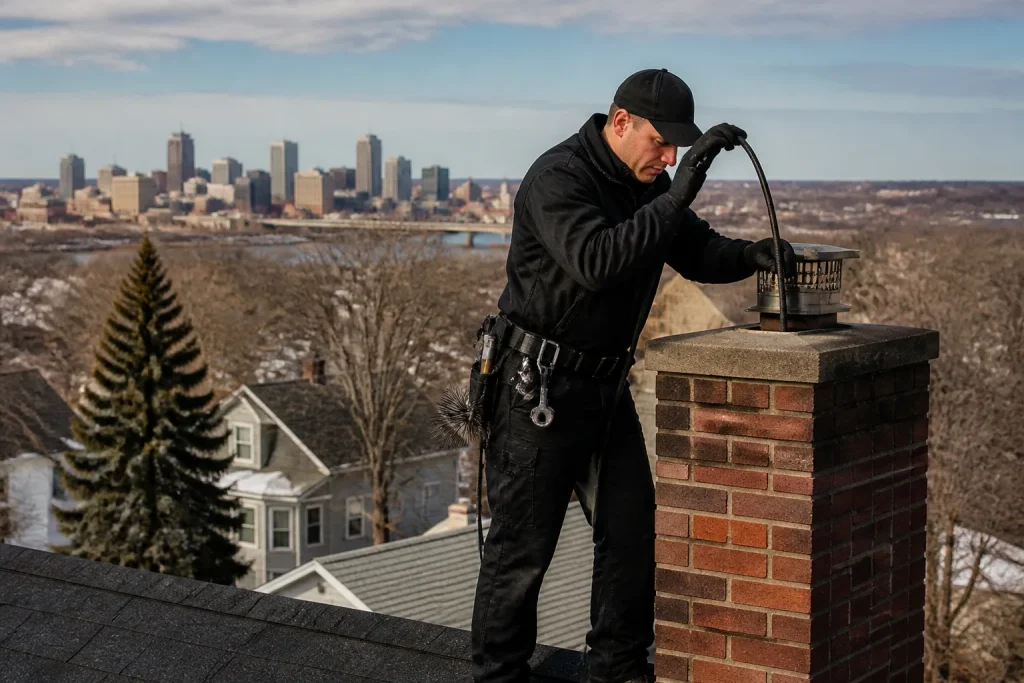
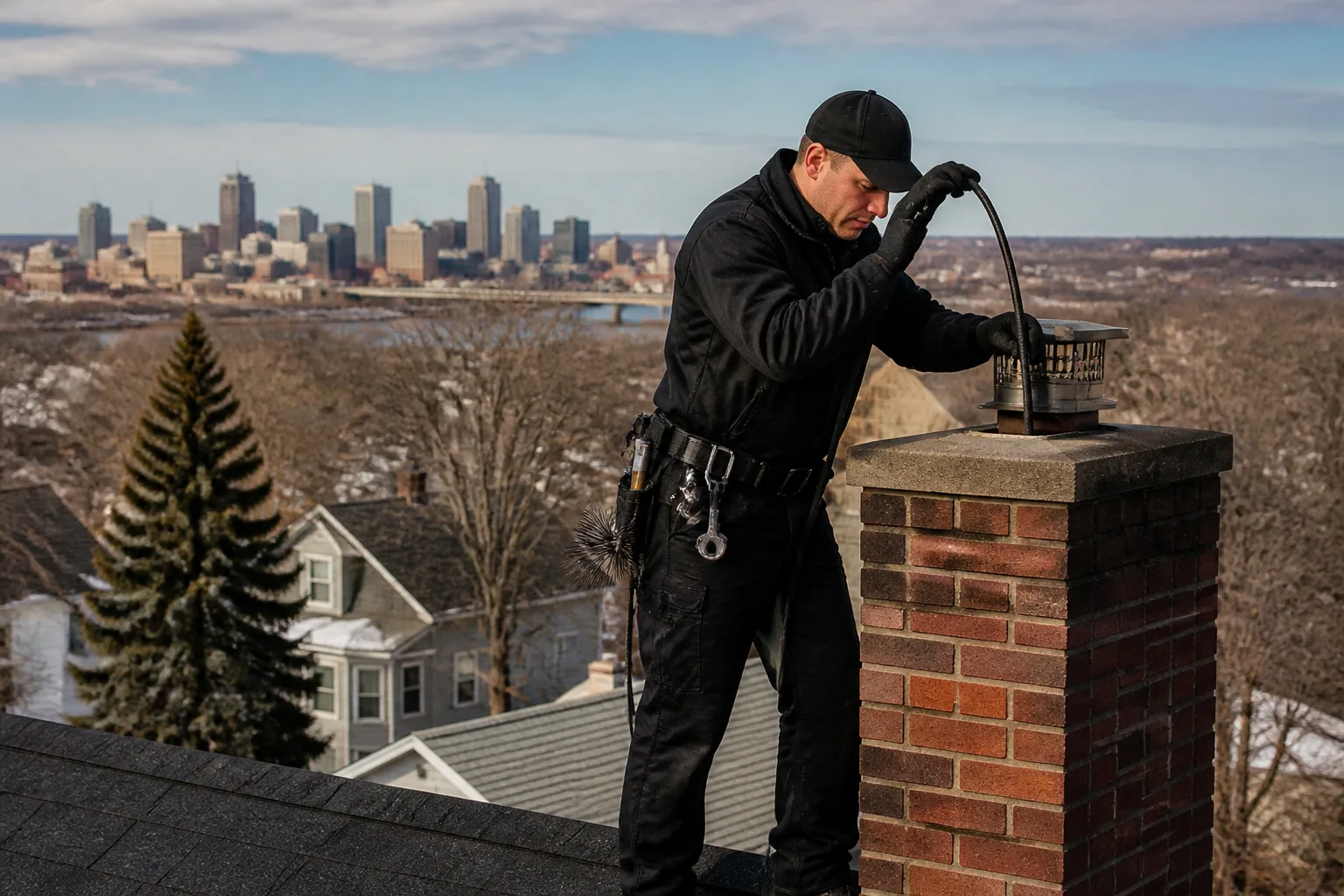
How to Choose the Right Chimney Cleaning Company in St. Paul
Minnesota does not license chimney sweeps. Anyone with a brush and a van can legally run one down your flue, bill you, and drive off. The credential burden lands on you, the homeowner, which is why the CSIA certification exists in the first place: the state won’t vouch for a technician, so a voluntary industry body does. That single fact reshapes how you should shop for chimney service in St. Paul. This guide gives you a verifiable checklist instead of a gut feeling. If you’d rather hand it to a specialist now, call (866) 942-6061.
What Does CSIA Certification Actually Mean?
CSIA stands for Chimney Safety Institute of America, and its Certified Chimney Sweep credential is the closest thing this trade has to a recognized standard of competence. The exam covers the anatomy of venting systems, how wood and gas appliances draft, creosote formation and its stages, the three levels of inspection defined by industry practice, and the code reasoning behind clearances and terminations. A certified sweep has also agreed to a code of ethics and keeps the credential current through continuing education. In a state that issues no chimney license, that’s a meaningful filter.
What CSIA certification does not cover is installation work. Liner systems, appliance venting and fireplace inserts fall under separate NFI (National Fireplace Institute) credentialing. So the honest picture is two credentials, not one: CSIA tells you the person can evaluate and clean a flue, and NFI tells you they’re trained to install the components that go inside it.
Verification is the part most homeowners skip. The CSIA maintains a searchable database of certified sweeps by ZIP code. You can look up the technician by name or company before your appointment, in about two minutes, and see whether the certification is active or lapsed. Ask for the name of the person who will be on site, not just the company name. A firm can advertise certification while the crew sent to your door holds none.
Our technicians have up to 11 years of experience, and we tell every caller the same thing: don’t take our word on credentials. Check the database.
The Five Questions to Ask Before You Book a St. Paul Sweep
These five questions separate a trained specialist from a handyman with a brush. Ask them on the phone, before anyone is dispatched.
- What does the written estimate include? A real estimate itemizes the sweep, the inspection level, and any repair, with the scope spelled out. “Chimney cleaning, $X” with no detail is a red flag on its own.
- Do you provide a Level 1 inspection report? A Level 1 is the standard inspection for a chimney in normal use with no known problems. It should come with documentation, not just a verbal “looks fine.”
- What brands of replacement components do you work with? A specialist names them without hesitation. We specify HeatShield for resurfacing and Gelco for caps and chase covers, and can explain why each is suited to a cold-climate flue rather than just dropping a logo.
- Are you insured for interior work? Sweeping moves soot and equipment through living space. Ask about liability coverage for interior damage, and get the answer before booking.
- Can you provide a camera scan report? A video scan of the flue interior is how a technician shows you what’s actually happening inside the chimney. No camera, no proof.
Anyone who gets defensive about these questions is answering them for you. A technician who works to a standard welcomes the checklist.
Red Flags That Show Up in the St. Paul Market
St. Paul has a housing stock full of older masonry chimneys, which means plenty of real repair work and plenty of opportunity for someone to sell work that isn’t needed. Three warning signs come up again and again.
Door-to-door solicitation after storms. A hail or wind event brings out canvassers offering chimney inspections and “free” damage assessments. Legitimate chimney work doesn’t get sold at the front door in the days after weather. A cap or chase cover damaged by wind is real, but the diagnosis should come from someone you called, not someone who called on you.
Vague written estimates. If the estimate doesn’t say what’s being done, where, with what materials, and what it costs, it’s not an estimate. It’s a number.
Pressure to approve liner work without a camera inspection on file. This is the big one. A technician who tells you the liner is shot and needs replacement, but has no video or photographic evidence to show you, is asking you to spend a significant amount of money on trust alone. Ask to see the scan. If it doesn’t exist, don’t approve the work.
In our experience, the clearest sign of a trustworthy operation is a technician who tells you when work can safely wait. A flue with minor surface deterioration isn’t an emergency. A technician who says so is one you can believe the rest of the time.
Why Generalists Get Cold-Climate Chimney Work Wrong
Gutter companies and handyman services add chimney sweeping as an add-on because a brush and a shop vac are cheap. What they usually lack is product knowledge, and in St. Paul that gap has consequences.
Specifying a cap, a chase cover, or a liner for this climate isn’t a matter of picking something that fits. It’s a matter of picking something that holds up through a heating season that runs long and cold, with repeated freeze-thaw cycles working on the exterior of the chimney while the flue runs hot inside. A cap that fits but isn’t sealed correctly lets water in, and water in a masonry chimney is the start of a much larger problem. A chase cover sized for mild weather may not survive a hard winter. Gelco and Famco components exist in the trade because they’re built to that standard; a generalist who hasn’t worked with them is guessing.
The same holds for liners. DuraFlex flexible liner systems get installed where a rigid liner won’t work: oversized masonry flues, appliance conversions, and runs that have to navigate an offset. Specifying one correctly takes experience with the system, not a catalogue. Our technicians have up to 11 years of experience with these installs, and it’s the part of the job where guessing costs the most.
How to Read a Chimney Inspection Report
A credible inspection report is a field document, not a form. It should tell you what the technician found and why it matters, in enough detail that you could hand it to someone else and they’d understand the condition of the system.
Here’s what a useful report includes:
- Which level of inspection was performed and what it covered
- The condition of the flue interior, with photos or video where accessible
- Creosote type and degree, described in trade terms, not just “dirty”
- The state of the cap, crown, and flashing, with notes on what’s intact and what isn’t
- Clearances and any visible defects with a location description
- Prioritized recommendations: what needs attention now, what can wait, and what’s routine
A one-page form with a checkbox and a signature offers nothing you can act on. Our inspection service documents system condition in writing, which is also what you’d want if you’re selling a St. Paul home or satisfying an insurance requirement. A report with no detail won’t satisfy either.
When to Call a Pro
Not every chimney question needs a technician on site. But some do, and waiting on them is the wrong kind of economy.
Call a professional if you smell creosote or smoke in the house when the fireplace isn’t in use, if the fire doesn’t draw the way it used to, if you see staining or crumbling on the exterior masonry, or if it’s simply been long enough since the last sweep that you’ve lost track. A chimney fire can run and put itself out without anyone noticing, and carbon monoxide from a blocked or damaged flue has no smell. Those aren’t reasons to panic. They are reasons to get an inspection on the calendar before the heating season starts, when scheduling is easier and the stakes are lower.
If sweeping and inspection turn up a repair, we handle it ourselves: sweep, repair, and inspection under one scope, so you’re not coordinating a second contractor after the first one leaves. Related services in St. Paul include our chimney sweep and chimney repair, both booked with a written estimate agreed before any work begins.
The Bottom Line
Minnesota leaves the vetting to you, so vet deliberately. Verify CSIA certification on the database. Ask the five questions before booking. Treat a repair recommendation without a camera scan as a proposal, not a diagnosis. And read the inspection report you’re handed: if it can’t tell you what’s wrong and why it matters, it isn’t documentation, it’s paperwork.
The right company will welcome all of that. We serve homeowners and property managers across St. Paul and treat a chimney as what it is: life-safety infrastructure. If you’re in St. Paul and need help, Tundra Chimney Sweep offers free estimates. Call (866) 942-6061. We answer 24/7. Fast dispatch from 7am to 7pm, Sunday through Friday.
Frequently Asked Questions
No. Minnesota does not license chimney sweeps, so there is no state credential to check. That’s exactly why CSIA certification matters here: it’s a voluntary industry credential that a technician can verify on the CSIA database, and it’s the closest thing to a competence standard this trade offers. Call (866) 942-6061 for an exact quote on a sweep: estimates are free.
The general guidance is once a year for a chimney in regular use, or whenever creosote buildup reaches about an eighth of an inch. A gas or oil appliance chimney is swept less often but still needs an annual inspection. How much wood you burn and how dry it is changes the interval, so the honest answer is: get it inspected, and the report will tell you. Call (866) 942-6061 to book an inspection.
A credible report names the inspection level performed, describes the flue interior with photos or video, notes creosote type, and lists the condition of the cap, crown and flashing. It ends with prioritized recommendations: what needs attention now and what can wait. A one-page checkbox form is not a report. Call (866) 942-6061 and ask what our report includes.
Creosote builds up on the flue walls and, once it reaches a certain thickness, can ignite. Blockages from soot, debris or a deteriorated liner also restrict draft, which lets carbon monoxide back into the house instead of up the flue. Neither failure is predictable, which is why an annual inspection is about knowing the condition of the system, not just cleaning it. Call (866) 942-6061 for a free estimate.
Written by the team at Tundra Chimney Sweep.
Need Chimney Cleaning Help?
Call Tundra Chimney Sweep - licensed & insured, here with fast help in St. Paul.
(866) 942-6061